


Short answer: why you often see wedding rings on the right hand in Arab contexts
A one-paragraph summary
In many Arab settings you will commonly notice wedding rings on the right hand because liturgical practice, especially among Eastern Christian communities, places the ring on the right ring finger during the marriage service; however there is no single pan-Arab rule and Muslim practice does not prescribe a mandatory hand, so local custom and modern fashion also shape what people do in daily life Encyclopaedia Britannica.
See curated ancient rings and provenance on Instagram
The Aurora Antiqua catalogue explains provenance and condition notes for rings, helping collectors read wearing signs without assuming a single cultural rule.
When this generalization applies and when it does not
The general pattern applies most clearly to Eastern Christian rites present in the Arab world, where ceremonial exchange often places a ring on the right ring finger, but it does not cover every family or region; in many Muslim-majority communities the choice of hand is a matter of custom or personal preference rather than religious prescription The Sacrament of Marriage (Coptic Orthodox) (see research on Arab marriage traditions).
Definition and context: what does wearing a ring on the right hand signify historically and liturgically?
Terms: wedding ring, ring exchange, right ring finger
For clarity, a wedding ring in this article means the band exchanged or acknowledged in a marriage context; ring exchange describes the ritual act in which one partner places a ring on the other, and the right ring finger means the fourth finger of the right hand when describing right-hand customs.

Liturgical symbolism in brief
In many Eastern Christian liturgies the ring exchange performed with the right hand carries symbolic associations with oath, blessing and honouring the preferred or dominant hand, a usage rooted in Byzantine and early Christian ceremonial language The Orthodox Wedding Service.
Religious perspectives: Christian and Muslim practices that shape ring-wearing
Eastern Christian rites and the right-hand tradition
Greek Orthodox and Coptic Orthodox wedding services commonly present and bless the ring on the right hand during the marriage liturgy, a practice that explains right-hand wearing among many Christians in Arab countries The Orthodox Wedding Service.
Quick checklist to judge whether ring placement is liturgical, cultural or personal
Use as a starting guide
Islamic sources and the absence of a mandated hand
Islamic legal and devotional texts do not specify a required hand for a wedding ring, and hadith collections note rings as items men and women could wear without prescribing a finger, so practice among Muslim communities across the Arab world tends to follow local custom rather than a single rule Sunnah collections and examples (see academic research).
How regional patterns differ: Egypt, the Levant, the Gulf and diasporas
Egypt as a case where right-hand use is common among Christians
In Egypt, right-hand ring-wearing is commonly observed among Christian groups because Coptic and Orthodox marriage ceremonies place the ring on the right ring finger during the liturgy, a pattern reflected in parish practice and community habit The Sacrament of Marriage (Coptic Orthodox).
Mixed practices in Gulf and Levant; Western influence
Gulf and Levant communities show mixed practices: some families maintain right-hand or ceremonial conventions, while urban and cosmopolitan couples increasingly adopt left-hand wearing under Western influence or personal preference, so visible patterns can vary from town to town How Arab weddings differ across the Middle East (see Arab wedding).
Ceremony and practice: where and how the ring is placed (wedding vs engagement, finger choice)
Wedding liturgy actions vs private exchanges
In liturgical wedding rites the officiant or celebrant may place the ring on the right ring finger as part of a formal blessing or exchange, while private engagements or civil ceremonies can follow different local patterns and often leave everyday wearing to personal preference The Orthodox Wedding Service.

Which finger: ring finger specifics
When we say right-hand use in this context we mean the right ring finger specifically; ceremonial placement often specifies that finger, whereas everyday wearing can shift to other fingers for comfort, fashion or functional reasons The Sacrament of Marriage (Coptic Orthodox).
Symbolism and social meaning: why the right hand is significant
Historical symbolism of the right hand

Social meanings in modern communities
In modern communities the symbolic meaning coexists with practical factors: handedness, fashion, workplace norms and family stories all shape whether someone leaves a ring on the right or moves it to the left, so seeing a right-hand ring does not automatically identify a wearer's faith How Arab weddings differ across the Middle East.
Practical guidance: what to do if you are a guest, partner or buyer who notices a right-hand ring
Simple etiquette pointers
If you are attending a ceremony, follow the lead of the officiant and local participants, and when greeting a newly married couple mirror the cues they give about ceremony involvement and kiss or handshake customs rather than assuming meanings from the side the ring is on How Arab weddings differ across the Middle East.
Right-hand wearing often reflects Eastern Christian liturgical practice and historical symbolism of oath and blessing, while Muslim practice generally leaves the choice to local custom and personal preference; regional fashion and diaspora influences also shape daily wear.
Questions you can ask politely
When in doubt, a short, respectful question to a host or the couple such as "Is there a particular way you prefer guests to participate in the ring exchange?" is appropriate and usually welcomed, and it avoids misreading cultural signals about hand placement Encyclopaedia Britannica.
Interpreting wearing patterns on old rings
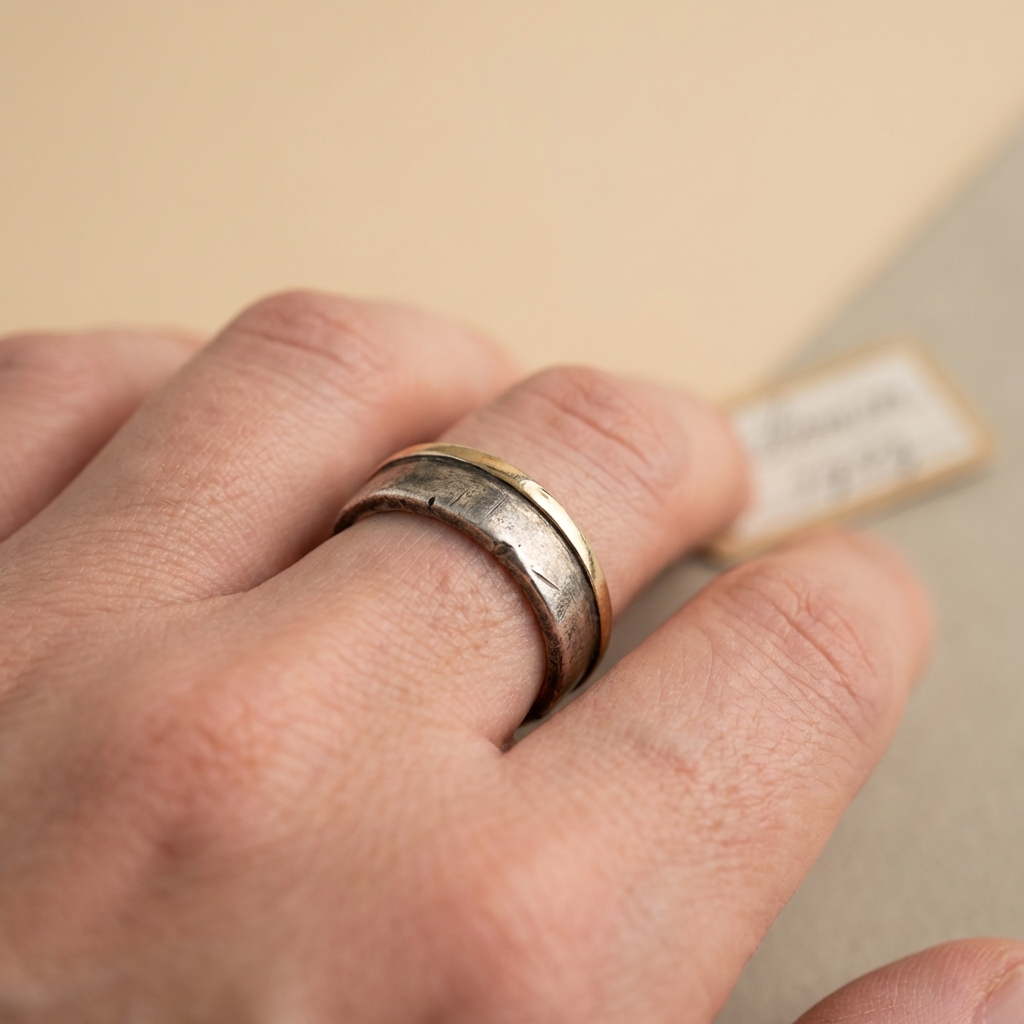
Documentation and condition notes to seek
Collectors should look for clear provenance, restoration notes and condition descriptions that explain what was stabilized or repaired and why, since those documents provide the strongest basis for interpreting a ring's social and ritual history rather than inferring certainty from wearing side alone Encyclopaedia Britannica.
Common misconceptions and pitfalls to avoid
Myths about religious requirements
One common mistake is to assume Islam prescribes left- or right-hand wearing; Islamic sources do not set a mandatory hand for wedding rings, so treating the hand as a proof of religious law is incorrect Encyclopaedia Britannica.
Mistakes buyers or visitors commonly make
Buyers and visitors sometimes over-interpret wear patterns or local anecdotes without documentary backing; a ring's visible wear can suggest long use but must be considered alongside provenance and expert condition notes to form a responsible conclusion How Arab weddings differ across the Middle East.
Short illustrative scenarios (no statistics): wedding scenes and what the ring placement can tell you
An Egyptian Coptic wedding ceremony
Picture a Coptic wedding where the priest places or blesses the ring on the right ring finger during the liturgy; guests who know the ritual expect this placement as part of the ceremony and interpret the right-hand ring as a liturgical act rather than a private fashion choice The Sacrament of Marriage (Coptic Orthodox).
A mixed-family Gulf wedding adapting Western styles
Imagine a Gulf family wedding where older relatives follow right-hand ceremonial gestures while younger urban guests who live abroad or consume Western media wear their daily rings on the left; this coexistence of ceremonial and everyday habits is increasingly common in many Levantine and Gulf settings How Arab weddings differ across the Middle East.
An urban couple choosing left-hand everyday wear
Consider a young urban couple who choose left-hand daily wear for comfort or fashion while still acknowledging a right-hand placement in a symbolic or liturgical moment; that split between ceremony and habit is one reason observers should avoid simple assumptions about identity from which hand holds a ring Encyclopaedia Britannica.
How to ask and learn more: polite questions and research pointers
Sample phrases for polite inquiry
Three short, polite questions you can use are: "Could you tell me about the ring tradition you use here?", "Do you have a preferred way guests should acknowledge the ring exchange?" and "Is the ring placement ceremonial or personal in your family?"; these openers help you learn without assuming meaning.
Where to find reliable source material
For authoritative liturgical detail consult service texts or parish resources, and for general cultural overviews begin with reputable summaries that discuss regional variation and ceremony; the Orthodox service descriptions and Coptic sacrament pages provide useful starting points The Orthodox Wedding Service.
Summary: key takeaways
There is no single rule across the Arab world about which hand a wedding ring must be worn on; right-hand use often reflects Eastern Christian liturgical practice rather than a fixed social law The Orthodox Wedding Service.
When in doubt, follow local custom or ask the couple or officiant, and collectors should rely on provenance and condition notes rather than assuming meaning from wearing side alone How Arab weddings differ across the Middle East.
Further reading and references
Useful public sources that inform this article include Orthodox liturgical guides, Coptic sacrament pages, Encyclopaedia Britannica entries on the wedding ring, searchable hadith collections for ring mentions, regional reporting on wedding practice and scholarly commentary on finger choice; consult the service text for liturgical procedure and reputable cultural reporting for social context The Orthodox Wedding Service.
Author note on limits and open questions
This article synthesizes public sources and does not claim exhaustive field data; up-to-date local surveys and ethnographic work would be needed to quantify youthful or urban shifts in ring-side practice across Arab countries How Arab weddings differ across the Middle East.
No. Islamic texts do not mandate a specific hand for wedding rings, so practice varies by local custom and personal choice.
In many Eastern Christian rites the ring is exchanged on the right hand as part of liturgy, reflecting symbolic traditions of oath and blessing.
Follow local cues, ask a polite question if needed, and avoid assuming the ring proves religious identity.
References
- https://www.britannica.com/topic/wedding-ring
- https://copticchurch.net/topics/marriage/
- https://www.goarch.org/the-orthodox-wedding-service
- https://sunnah.com/
- https://www.aljazeera.com/features/2016/5/9/how-arab-weddings-differ-across-the-middle-east
- https://theconversation.com/why-we-wear-wedding-rings-on-different-fingers-154321
- https://auroraantiqua.store/products/authentic-medieval-crusader-silver-ring-bethlehem-star-of-bethlehem-motif-12th-13th-century-ad-us-10-eu-62-5
- https://auroraantiqua.store/collections/rings
- https://auroraantiqua.store/products/professional-restoration
- https://auroraantiqua.store/blogs/questions-and-answers/what-finger-did-romans-wear-rings-on
- https://www.researchgate.net/publication/368485154_The_Tradition_of_Arab_Ethnic_Marriage_in_the_Lens_of_Interpretive_Symbolic_Theory
- https://en.wikipedia.org/wiki/Arab_wedding
- https://academic.oup.com/ojlr/article/7/3/427/5075173