


Definition and context: what people mean by a "divorce ring" and Ancient Rings in real use
The phrase "divorce ring" is a lay term rather than a legal category. People use it to describe a range of outcomes: a ring that someone keeps after separation, a ring that is removed and set aside, a piece that is repurposed, or a ring put up for sale. In many conversations the term is short for any ring tied to a former relationship, distinct from legally defined items like an engagement ring or a wedding ring.
Because customs around wearing rings vary widely, the social meaning of keeping or moving a ring after separation changes by place and by community. For example, the historical idea of the fourth finger as the primary wedding finger explains why changing hands can look like a visible signal of changed status, but regional variation is important to bear in mind BBC Future on wedding finger history.
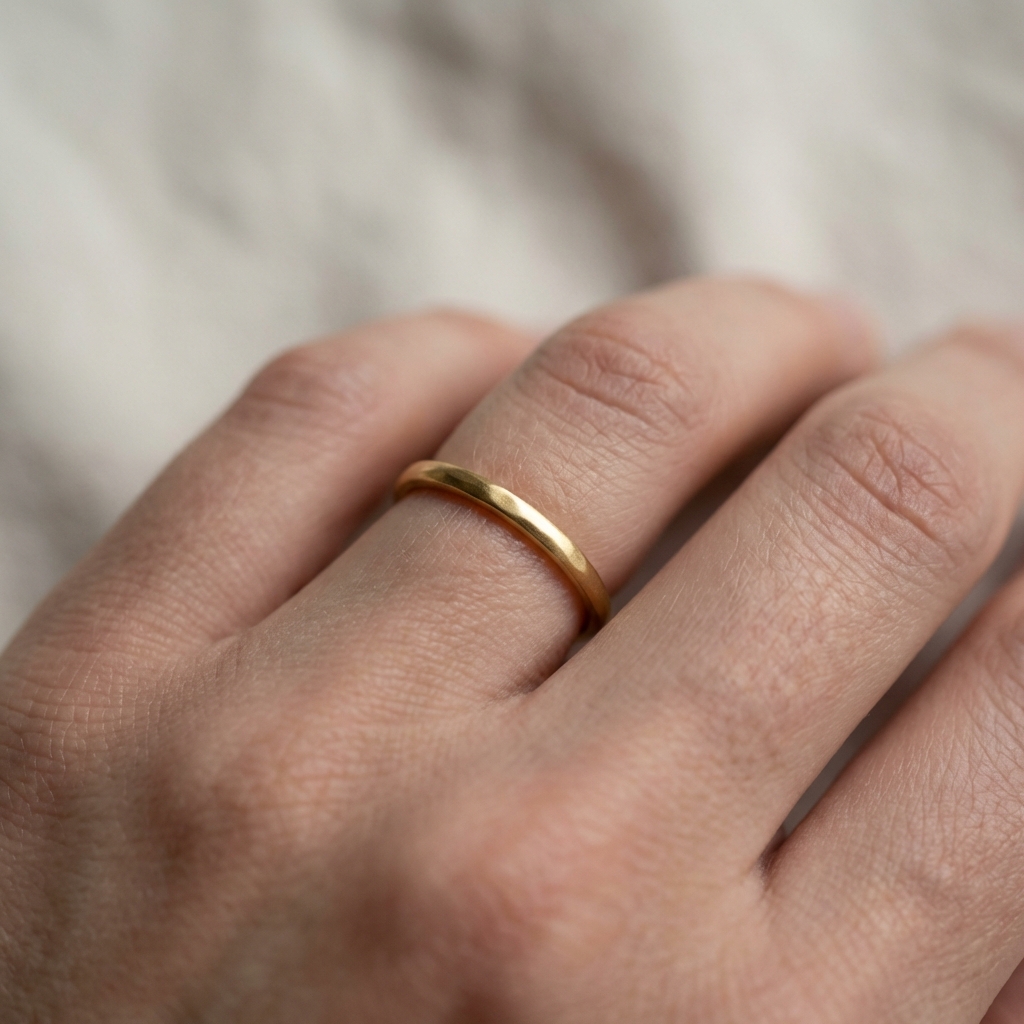
When the object in question is an ancient ring, different priorities usually apply. Ancient Rings often come with condition notes, patina, and provenance considerations that make simple alterations more consequential than with modern jewelry. Treating an antiquity as if it were a contemporary piece can risk damage or loss of information that is important for collectors and conservators.
For readers who own documented or historically significant rings, this article frames practical choices around three linked concerns: local custom and social meaning, legal ownership and conditional-gift issues, and conservation-aware handling for artifacts and antiquities.
Regional traditions: left hand, right hand and what that means for the ring finger
In much of the English-speaking world and in many Anglo-influenced contexts, the fourth finger of the left hand is the conventional location for engagement and wedding rings. Because of that convention, moving a ring away from the left fourth finger is often read as a change in marital status in those communities Smithsonian piece on wedding-ring traditions.
By contrast, several continental European and Eastern European countries customarily use the right hand for wedding rings, often on the same fourth finger; other writeups note similar meanings for a ring on the right ring finger Ring on Right Ring Finger: Significance. The social signal of switching hands can be quite different in those places.
South Asian and many Middle Eastern contexts add another layer of visible marital symbols, such as mangalsutra necklaces or sindoor, that coexist with finger-based conventions. Where those visible symbols are prominent, changing the placement of a finger ring after separation can mean something other than loss of marital status, or it may be less visible socially Emily Post Institute on ring etiquette.
To help you identify local practice quickly, use the short checklist below to note what is usual where you live and what common signals might mean.
quick local-check questions to identify customary ring hand and signals
Ask a local elder or jeweller if unsure
When thinking about whether to move a ring after separation, consider both the local custom and how closely your community watches symbolic signals. In tightly networked communities a hand change can be noticed and interpreted quickly, while in other settings it may pass without comment.
Legal basics: ownership, conditional gifts and what to consider before selling
Ownership questions for engagement and wedding rings are often governed by the conditional-gift doctrine in common-law systems, which treats an engagement ring as a gift given on the condition that the marriage occurs; if the condition fails, ownership can be contested Legal Information Institute overview on engagement rings.
Because statutes and case law vary between jurisdictions, people with high-value rings or items of historical significance should seek local legal advice before selling or permanently altering an object. A lawyer can explain whether local courts have treated a ring as a conditional gift or as the separate property of the recipient Nolo on engagement ring ownership.

When a dispute over a ring’s ownership is possible, provenance documentation and contemporaneous condition notes strengthen any claim and help mediators or courts evaluate the history of the object. If the piece is an ancient ring, preserving provenance and restoration notes is especially important because they tie into both value and cultural heritage concerns.
Etiquette and personal choice: how modern guidance frames decision-making
Recent etiquette guidance emphasizes personal preference and safety rather than strict rules. Practical options commonly recommended include continuing to wear the ring as before, moving it to another finger or the other hand, resetting the stone in a new setting, selling, or recycling the metal and gems.
Which option feels right depends on privacy, safety, and local social meaning. If you are concerned about being recognized or about unwanted attention, discrete solutions such as anonymized sale channels or wearing a plain band in place of a former ring are often suggested Emily Post Institute on ring etiquette.
There is no single global rule; meanings follow regional ring traditions so moving a ring can signal different things depending on local custom, legal context, and whether the piece is historically significant.
If emotional factors are central, some people prefer to keep the original but have it professionally altered or mounted into a piece that reduces direct association with the relationship. Others find closure in selling or repurposing the materials. Contemporary jewellers and sellers also commonly offer re-setting and recycling services if a person wants the gemstone or metal materials preserved in a new form.
Etiquette options at a glance
Keep wearing, change finger or hand
Keeping the ring as-is can be practical when no legal ownership dispute exists, and when the wearer values continuity or memory. Moving the piece to another finger or to the opposite hand can reduce social signaling but may still be noticed in communities that monitor such changes closely.
Reset or repurpose
Resetting a gemstone into a new setting or repurposing the metal into a different piece allows material preservation while changing the object’s visible association. When the ring is historically significant, repurposing should only be done after consultation with a conservator or an expert familiar with treatment appropriate to antiques.
Practical options: steps to change, repurpose or sell a ring after divorce
Start with a simple, documented assessment. Step 1, examine and record condition notes: note wear, cracks, visible repairs, and any hallmarks or maker marks. Step 2, gather provenance documentation and any prior restoration notes you have access to; for ancient pieces these documents can materially affect handling and sale options.
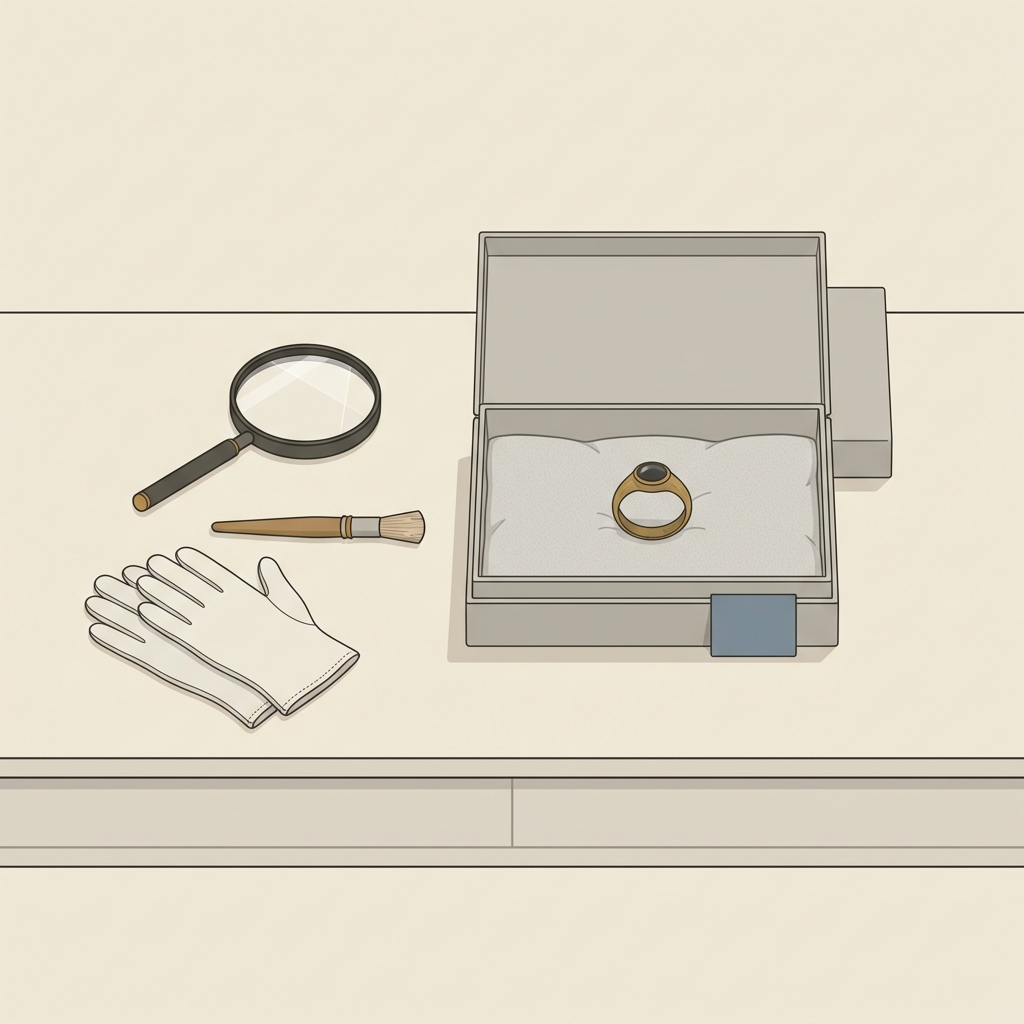
Step 3, obtain an independent appraisal if the ring may be high value or historically significant. An appraisal helps set expectations for resale and clarifies whether conservation-focused treatment is preferable to cosmetic work Emily Post Institute on ring etiquette.
If you plan to reset or resize, ask a conservator-aware jeweller to explain trade-offs. Resizing or aggressive polishing on an ancient ring can remove patina or historic tool marks that are important for dating and provenance; document any intervention carefully in restoration notes.
When selling, choose a route that matches the ring’s status: an ordinary consumer resale channel may suit a modern piece, while consignment with a specialist dealer or auction house is typically better for documented antiquities. For privacy, anonymized listings or private treaty sales reduce exposure while still allowing a documented transfer of ownership.
Checklist: immediate practical steps
- Record condition notes and photographs
- Collect any provenance or prior appraisal documents
- Get an independent valuation if needed
- Decide whether conservation-aware work is required
- Choose sale or repurpose route and document the chain of custody
Special care for Ancient Rings: conservation, provenance and when to consult a specialist
Ancient Rings require different handling because their physical state and historical information can be lost through standard jeweller interventions. Many ancient pieces show wear consistent with age, and preserving patina and structural evidence is often preferable to aggressive restoration Aurora Antiqua listing image.
Before any work on an ancient ring, collect provenance and documentation: collection history, prior ownership notes, verification letters if available, and existing restoration notes. These records guide decisions about whether a ring should be conserved, sympathetically stabilized, or left untouched.

If a conservator or a specialist jeweller is needed, ask them to provide written recommendations and an intervention plan that can be recorded as restoration notes. Examples of careful treatments include structural stabilization that leaves surface patina intact, reversible repairs when possible, and minimal cleaning that does not remove tool marks or hallmarks.
When documenting treatments, use precise language: list materials used, describe whether changes are reversible, note whether soldering or alloy additions were necessary, and record dates and the specialist’s credentials. This clarity protects the ring’s historical information and supports future resale or curation.
Decision framework: a simple checklist to decide what to do with a ring
Begin with legal ownership. Confirm whether any conditional-gift doctrine or local statute could affect the title to the ring, and pause before irreversible steps if ownership could be contested Legal Information Institute overview on engagement rings.
If ownership is clear, next evaluate provenance and condition notes. High provenance value or fragile condition generally favors conservation-aware repurposing or archiving rather than immediate sale or invasive alteration.
Factor in emotional readiness. If the psychological cost of keeping the ring outweighs other considerations, repurposing the material into a new piece or selling may be appropriate. For historically significant rings, place an extra emphasis on specialist input before any irreversible work.
Quick decision flow
- Confirm ownership clarity
- Assess provenance and condition
- If historically significant, consult specialist conservator
- Choose keep, repurpose, sell, or archive based on above
Common mistakes and how to avoid them
A common error is acting quickly without documentation: removing a ring, polishing it aggressively, or having it altered before recording provenance and condition can remove key information and reduce options for conservation or sale.
Another frequent mistake is assuming a modern jeweller’s repair techniques are appropriate for an antiquity; inappropriate soldering or polishing can destroy patina and make future dating or attribution difficult Aurora Antiqua listing image.
@auroraantiqua curator tips and behind-the-scenes context
Follow the checklist in this article before making irreversible changes, and consider conservation-aware options for any historically significant piece.
Privacy missteps are also common. Publicly posting identifiable pictures of a valuable ring can attract unwanted attention. If privacy matters, use anonymized sale channels and blur or withhold identifiable provenance details until ownership or sale terms are agreed.
Practical examples and scenarios: short case studies to illustrate choices
Everyday example: A person in an Anglo-influenced community chooses to move a modern engagement ring from the left fourth finger to the right hand while they sort emotional and legal matters. This reduces visible signaling and can be reversed easily if circumstances change.
Collector example: A buyer of an ancient ring notices hairline cracks and a fragile hoop. Rather than resizing, they consult a conservator who recommends structural stabilization and writing clear restoration notes. That conservator-guided approach preserves patina and provenance and leaves future options open Aurora Antiqua listing image. See our Q&A on buying rings here for more on buying and handling ancient pieces.
Selling example: Someone planning consignment prepares a packet of documentation that includes high-resolution photos, condition notes, any prior appraisals, and a short provenance summary. This documentation helps a specialist consignor assess market route and reduces the chance of later dispute over condition or ownership Nolo on engagement ring ownership.
Conclusion: next steps and resources
Deciding what to do with a ring after separation combines regional custom, legal clarity, and practical conservation concerns. For ancient or documented pieces, prioritize provenance and restoration notes and seek specialist advice before irreversible action Smithsonian piece on wedding-ring traditions.
Immediate next steps: record condition notes and photographs, assemble any provenance documents, obtain an independent appraisal if value is uncertain, and consult a conservator for historically significant objects. Aurora Antiqua positions itself as a curatorial reference for collectors and can be a starting point for understanding documentation and condition reporting, while legal questions should be directed to local counsel.
It depends on local custom; in some communities switching hands or fingers signals a change in marital status, while in others it may go unnoticed. Choose what feels safest and consider discretion if privacy matters.
Ownership rules vary by jurisdiction; in many common-law places an engagement ring may be treated as a conditional gift. Seek local legal advice before selling high-value or contested items.
For ancient rings, avoid irreversible treatments before consulting a conservator. Record condition and restoration notes, and get expert guidance to preserve historical information.
References
- https://en.wikipedia.org/wiki/Ring_finger
- https://www.bbc.com/future/article/20140702-why-do-we-wear-wedding-rings-on-fourth-finger
- https://www.smithsonianmag.com/history/why-wear-wedding-ring-fourth-finger-180971702/
- https://emilypost.com/advice/wedding-ring-etiquette/
- https://jewelrybyjohan.com/blogs/mastering-the-art-of-rings/wedding-ring-on-right-hand-meaning?srsltid=AfmBOooymnHuFg6CElbn37D3j21PjYJvi5d1l5pCHzZXgIaSEfyL_Tu1
- https://diamondrensu.com/blogs/wedding-bands/ring-on-right-ring-finger?srsltid=AfmBOopVjpLoCoauT6im1sl-j2WNVm4gpXAC4tKjLUJm21c3atSixhxq
- https://www.law.cornell.edu/wex/engagement_ring
- https://www.nolo.com/legal-encyclopedia/who-gets-engagement-ring-divorce.html
- https://cdn.shopify.com/s/files/1/0897/7140/9738/files/il_fullxfull.6598686573_2enh.jpg?v=1753256126
- https://auroraantiqua.store/products/medieval-bronze-ring-aurelia-13th-15th-century-ad-gothic-jewelry-antique-historical-artifact-restored-ancient-ring
- https://auroraantiqua.store/collections/rings
- https://auroraantiqua.store/products/professional-restoration
- https://auroraantiqua.store/blogs/questions-and-answers/can-i-buy-a-ring