


What the 2 1 1 rule is and why it matters for ancient rings
Definition and common modern interpretation, Ancient Rings
The 2 1 1 rule is a contemporary styling guideline that editors use to create a visually balanced set of jewelry: two smaller supporting pieces on one side, one focal piece on the other, plus one wrist or neck accent. In practice this often means two modest rings on one hand, a statement ring on the other hand, and a single bracelet or pendant to complete the composition, and editors describe it as a flexible guide rather than a strict formula Who What Wear.
Combine the 2 1 1 visual guideline with precise measurements, condition and restoration notes, and provenance checks; prioritize stability and documented repairs before attempting to wear or stack historic rings.
For collectors working with ancient rings, the 2 1 1 guideline can be useful because many surviving antiquities already display a clear visual hierarchy, such as a large intaglio bezel paired with simpler bands; still, adapting the rule requires attention to bezel size, patina, and any restoration or condition notes that affect wearability.
Where the 2 1 1 rule came from and how editors use it
Origins in contemporary fashion editing
The rule emerged in modern fashion editing and resurfaced widely in the 2010s and early 2020s as editors sought simple heuristics readers could apply to everyday accessorizing, and prominent publications continued to explain the guideline through 2024 and beyond Vogue.
How publications describe the rule today
Contemporary guides frame the 2 1 1 approach as a readability technique, helping an observer quickly parse an arrangement, rather than a prescription for exact proportions; that editorial emphasis on visual balance rather than fixed measurement is important for collectors considering historic pieces Real Simple.

Core framework: how to read the 2 1 1 rule for ancient rings
Translating two smaller pieces, one focal piece, and one accent into ring terms
When applying the 2-1-1 ring styling logic to antiquities, read the "two" as two simpler bands or thin bezels, the "one" as a dominant bezel such as an intaglio, and the final "one" as a separate accent worn on the wrist or as a pendant; this mental map helps you evaluate pairings before attempting to wear them. Museum objects often illustrate this arrangement visually, where the engraved or intaglio bezel acts as the focal element and plain bands play supporting roles The Metropolitan Museum of Art.
Simple measurement tools and a compact checklist to evaluate rings before styling
Use steady lighting for accurate photos
Translate perceived visual weight into measurable features: bezel diameter generally corresponds to how dominant a ring reads at a glance, band width and shoulder profile contribute to bulk and silhouette, and intaglio or carved surfaces can add visual density beyond physical size. Use these correspondences to decide which pieces should be the focal "one" and which fit the supporting "two" role without forcing fragile mounts into modern stacking trends.
Practical measurement checklist and tools
Key dimensions to record: bezel diameter, band width, ring size, shoulder thickness
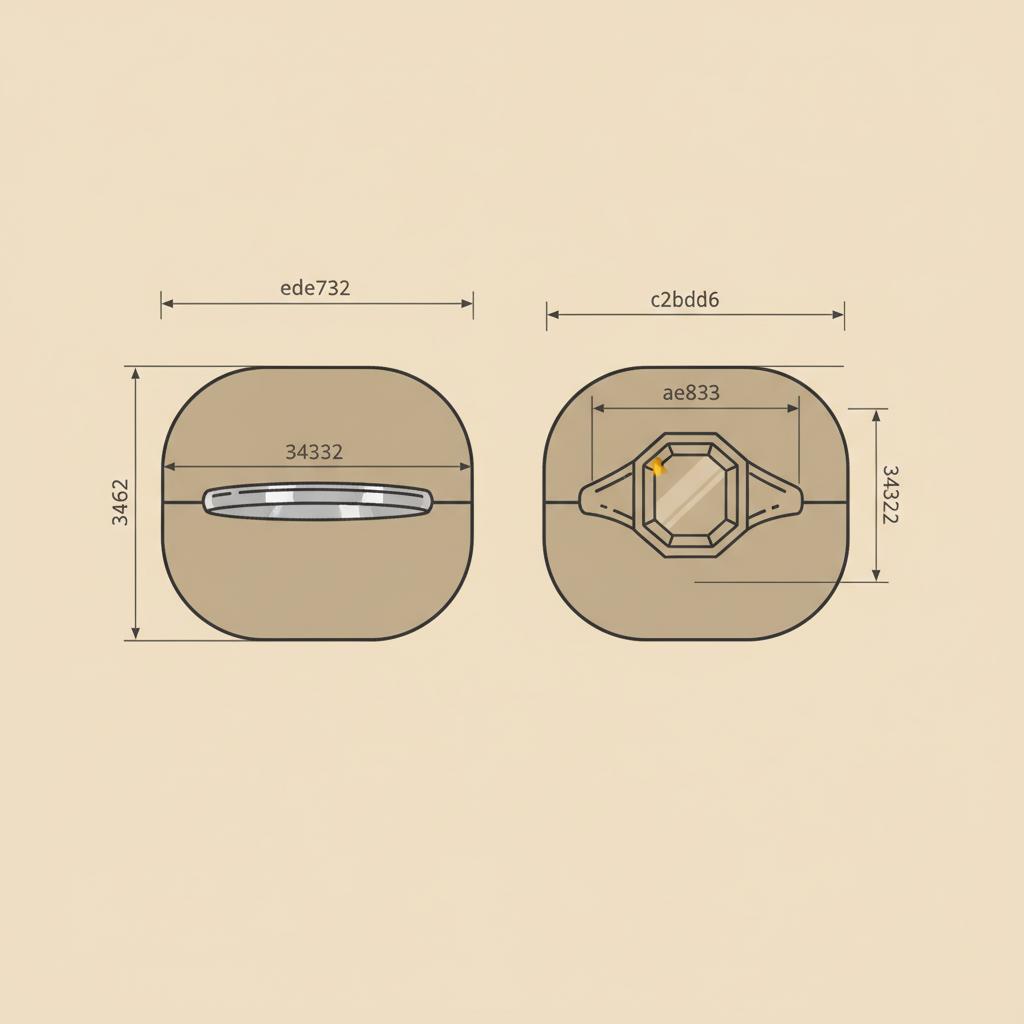
Before styling or buying, record a short set of measurements for each ring: bezel diameter to judge visual dominance, band width and shoulder thickness for comfort and stacking compatibility, and the ring size to confirm wearability. Conservation literature recommends precise measurements paired with condition notes to prevent surprises and to keep an objective baseline for comparison Journal of Conservation and Museum Studies, and further reading includes Ancient Rings: An Illustrated Collector's Guide.
Simple tools and photographic angles to capture the data
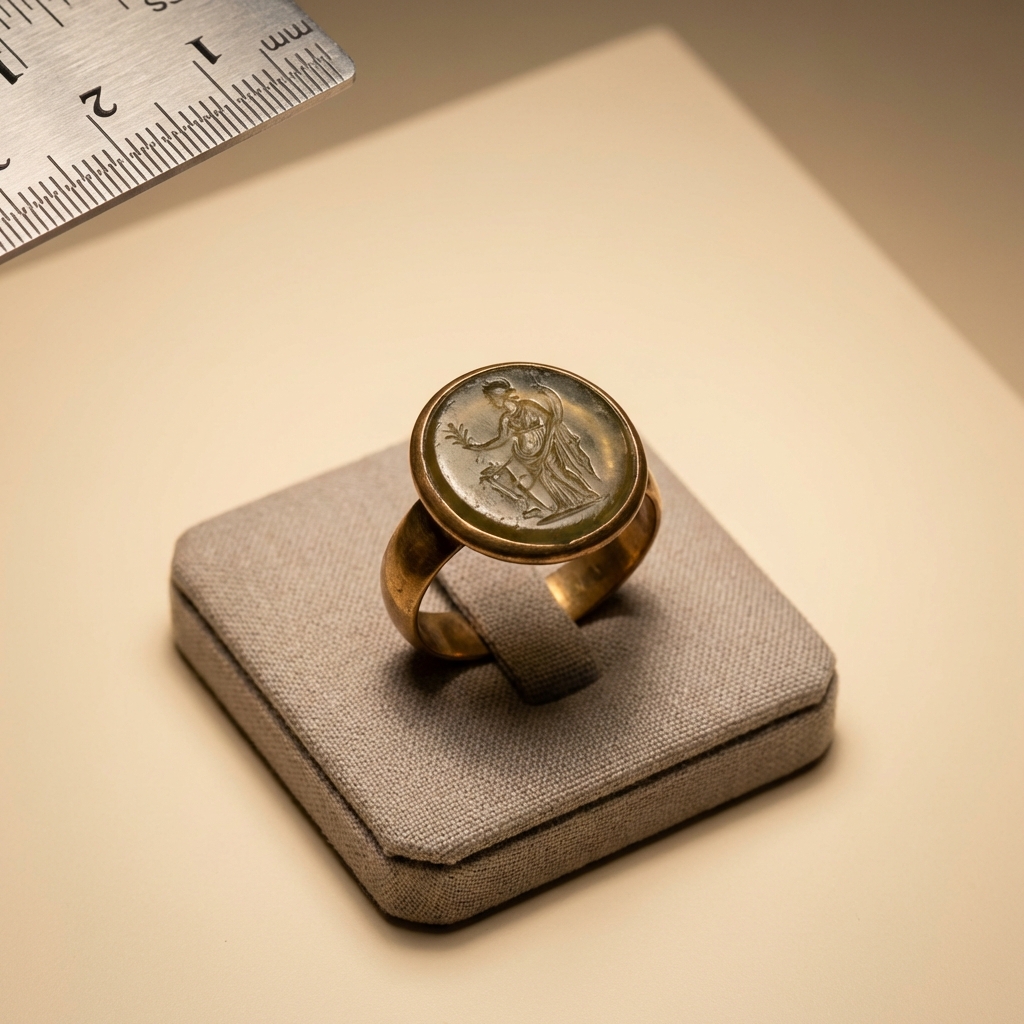
Use digital calipers for bezel diameter, a metric ruler placed next to the object in photographs for scale, and macro camera angles that show the bezel face and the band profile. Consistent lighting and including a size reference in every shot helps other collectors and curators assess visual balance remotely, and these images should always be cross-checked with the seller's restoration and condition notes before deciding to wear a piece.
Use steady lighting and include a metric scale in every photo so measurements can be checked remotely; when in doubt, ask the seller for additional views. Collectors discuss measurement methods online and the practical limits of resizing and repair in forum threads forum discussion.
How to choose which ancient rings to pair using 2 1 1
Prioritizing stability and secure mountings
Start by prioritizing structural stability: a secure bezel and intact shoulders are preconditions for wearing an ancient ring, because an otherwise well matched pairing becomes a preservation risk if a bezel is loose or a band has micro fractures. Condition and restoration notes should influence whether you treat a piece as wearable or display-only, and documented repairs can change how a ring interacts with others in a set Journal of Conservation and Museum Studies.
Pairing by visual weight rather than exact size
Match by perceived visual weight, not by identical dimensions: a dominant intaglio can be balanced by two narrow bands whose patina and profile complement it, even if their bezel diameters differ. Look for complementary motifs and finishes so the overall composition reads as intentional, and remember that the 2-1-1 guideline is a starting heuristic for arrangement rather than a rule that must be followed exactly.
@auroraantiqua behind the scenes and curated finds
Explore curated listings that include condition notes, measurements, and provenance summaries to decide which pieces are safe to style and which should stay as display items.
Decision criteria: buying, wearing, and documenting ancient rings for styling
Checklist before wearing: condition, provenance, restoration details
Use a brief buying checklist: request clear photos and measurements, ask for condition notes and restoration descriptions, and verify any available provenance or collection history before making plans to wear a ring, and check any relevant import restrictions official guidance. Well documented pieces allow more informed decisions about occasional wear, but documentation does not replace conservation judgment about fragility The Metropolitan Museum of Art.
How documentation affects selection and display
Documentation shifts the practical choice: a ring with good provenance and carefully recorded restoration notes can be selected for special occasions with more confidence, while items lacking such records are better treated as display objects or loaned to trusted conservators for assessment. Keeping your own measurement photos and a baseline condition record helps you track any changes after handling or display, and supports responsible stewardship.
Typical mistakes, preservation risks, and what to avoid
Common styling errors that risk damage
A frequent error is assuming modern stacking proportions apply to fragile historic mounts, which can place strain on thin shoulders or push loose bezels out of alignment. Another misstep is relying on surface appearance alone, since patina and uneven wear can mask cracks or repaired sections that make a ring unsuitable for wear Journal of Conservation and Museum Studies.

Misreading restoration as original work is another common pitfall: over-polished fills or modern solder can alter proportions and make a ring look more compatible for stacking than it truly is. When in doubt, consult the seller's restoration notes and consider wearing a modern replica for everyday use rather than risking an original.
Practical examples and museum pairings you can learn from
Short case studies: Roman intaglio paired with simple bands
Museum examples often show the same visual logic editors describe: a Roman intaglio with a prominent bezel functions as the focal piece, while plain or minimally decorated bands act as supports so the intaglio remains the visual center. Looking at curated objects helps translate editorial advice into concrete choices for collectors The Metropolitan Museum of Art.
How museum objects illustrate dominant bezel plus supporting simpler rings
The British Museum and other collections present rings where a single dominant bezel is paired visually with narrower, simpler hoops that do not compete with the intaglio for attention; these pairings demonstrate the recurring proportional relationships that the 2 1 1 guideline highlights, while also reminding us that no single mathematical proportion has been formalized for historic rings in archaeological literature British Museum.
Study the images for bezel scale relative to finger width, the presence of intaglio carving which increases perceived weight, and the plainness of supporting bands; these features are reliable signals for choosing which ring becomes the focal "one" and which fit the supporting "two" role, without forcing modern conventions onto fragile historic mounts.
Conclusion: using 2 1 1 as a responsible styling checklist for ancient rings
Quick recap and practical next steps
Use the 2 1 1 rule as a responsible heuristic: measure bezel diameter and band width, consult condition and restoration notes, verify provenance when available, and then decide whether a piece is suitable for occasional wear or better left as a display object. Combining visual balance with conservation-aware checks helps preserve the object while allowing collectors to enjoy wearable history Journal of Conservation and Museum Studies.
Further reading and documentation priorities
Prioritize clear measurement photos, written restoration notes, and any available collection history when researching a ring. These records are the practical foundation for translating a styling guideline into safe choices, and they help collectors and curators make decisions that respect both aesthetics and preservation.
Treat the 2 1 1 rule as a flexible heuristic. Prioritize structural stability, condition notes, and documented restoration before wearing a historic ring, and use the guideline to plan visual balance rather than as a strict measurement rule.
Record bezel diameter, band width, shoulder profile, and ring size, and support these with consistent measurement photos and condition notes to assess compatibility and wearability.
Daily wear is not recommended unless the piece has clear documentation showing stable condition and any restoration is professionally recorded; otherwise consider occasional wear or using a replica for frequent use.