


What is an ancient signet ring? Definition and context
Seal versus signet: forms and functions
An ancient signet ring is a wearable device whose engraved face, when pressed into soft material such as wax or clay, produced an impressed seal used to identify a person, household or office and to authenticate documents or containers. This broad function, combining practical sealing with personal or corporate identity, is well explained in museum literature on seals and sealings, which treats signets as one part of a wider sealing technology across antiquity Metropolitan Museum Seals and Sealings. For accessible overviews of signet-ring history see the Victor Mayer account on the subject The History of Signet Rings.
Combine careful recording of motif and material, comparison with museum catalogues, and evaluation of inscriptional and provenance evidence; motifs alone usually provide probable, not certain, readings.
Not every decorated ring acted as a seal; some rings carried motifs that were primarily decorative or protective, while others were evidently designed to be pressed as intaglios for impressions. Distinguishing these uses requires attention to the ring face, the depth and orientation of engraving, and whether the motif is carved in intaglio, which is typical for making impressions.
Where signets appear in the archaeological record: ancient signet ring contexts
Sealing devices and signet rings are attested from the ancient Near East and Egypt through the classical Mediterranean into medieval Europe, appearing in tombs, domestic assemblages and administrative contexts in museum collections and archaeological reports Oxford Research Encyclopedia overview of seals.
Readers should understand the term seal to include a range of objects, from cylinder seals and stamp seals to ring intaglios; the form varies with region and period, and the same social practice of sealing documents or goods could be carried out by different object types.
A brief historical overview: where and when signets were used
Near Eastern and Egyptian origins
In the Near East and Egypt, sealing devices such as cylinder seals and stamp seals appear early in the archaeological record and served administrative and identification functions in bureaucratic and commercial contexts. Museum catalogues and synthesis articles place these early attestations as foundational for later signet traditions in the Mediterranean Metropolitan Museum Seals and Sealings. A concise modern summary of signet-ring origins is available from the Gem Society history overview History of Signet Rings.
Greek and Roman continuities and changes
Greek and Roman practices show continuity with earlier sealing traditions but also develop distinctive local uses. In Roman contexts, signet rings frequently performed both legal and administrative sealing and public social signaling, where the ring impression helped authenticate documents while the visible ring served as a marker of identity and status Personal Identity and Signet Rings in the Roman World. Further popular histories of the signet's evolution provide complementary context Victor Mayer - signet history.
Medieval and Byzantine developments
In medieval and Byzantine contexts the evidence shows a shift in some uses, with devotional, pilgrim and cross motifs becoming prominent on rings and seals that may signal faith or pilgrimage identity rather than primarily serving as administrative seals British Library collection guide on medieval seals.
Common motifs and what they can mean
Deities, animals and protective imagery
Common motifs on ancient signet rings include gods and goddesses, animals and protective imagery, and these motifs often relate to protection, virtues or affiliation rather than literal ownership claims. For example, deity imagery in Roman contexts can indicate protective emphasis or social affiliation rather than naming an owner outright British Museum rings overview.
See behind the desk at @auroraantiqua
Download a one page checklist of frequent motifs and questions to ask sellers to help focus identification and documentation checks.
Animals, divine figures and symbols were part of local iconographic vocabularies; to read them cautiously, compare the motif to regional parallels and avoid assuming a single fixed meaning without supporting inscriptional or provenance evidence.
Monograms, initials and household emblems
Monograms and initials occur on many signet rings, and where a clear letter sequence or name is present that evidence carries more weight; however, similar letterforms can be decorative or conventional in some contexts, so inscriptions need to be read with attention to palaeography and comparanda Penn Museum guide to seals and materials.

Geometric patterns and inscriptions
Geometric motifs and abstract marks may function as personal or household emblems, workshop marks, or simple decoration; their interpretation benefits strongly from comparison with secure catalogued examples rather than from isolated visual similarity alone.
Materials, techniques and why they matter for meaning
Hardstones and intaglio technique
Hardstone intaglios, such as carnelian and agate, were commonly used because their hardness produces durable impressions suitable for sealing; the choice of a hardstone intaglio often signals a preference for producing repeated, legible impressions and can indicate higher status compared with soft metal faces alone Penn Museum on seals and materials. For technical and historical perspectives on ancient gems see the Getty publication on ancient gems and rings Ancient gems and finger rings - Getty Museum.
The intaglio technique, where the design is carved into the face so the impression reads in positive, is a key technical trait to note when judging a ring as a functional seal rather than a merely decorative bezel.
Metals, wear and conservation implications
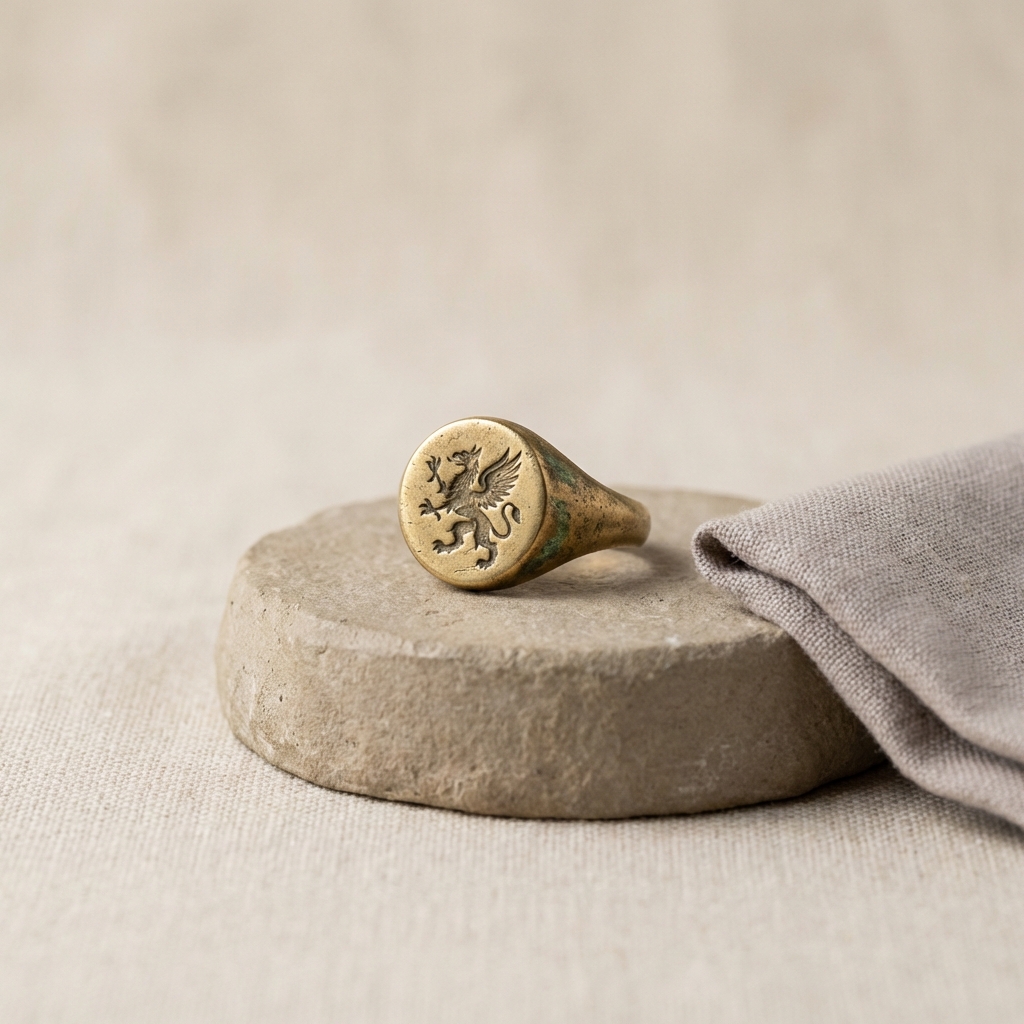
Metal choices, from gold and silver to bronze and copper alloy, affect durability, repair history and how the object presents today; conservation and restoration notes are essential when reading a piece, because later repairs, re mounting or polishing can obscure original features or create misleading appearances.
When assessing a listing or a museum object, look for explicit restoration notes and condition statements that describe what was stabilized, repaired or left untouched, as these inform how much weight to give visual details versus expected original features.
A practical framework: how to read what an ancient signet ring symbolizes
Step 1. Record motif, material and measurements. Begin by documenting the motif, the material of the bezel and hoop, and clear measurements; record any visible inscription and the orientation of the design relative to the hoop. Detailed recording helps you compare the object to catalogued parallels and supports requests for clearer photos or specialist input Metropolitan Museum Seals and Sealings.
Step 2. Compare with iconographic traditions and parallel finds. Use museum catalogues and collection overviews to find similar motifs in secure contexts, and note whether the motif appears regionally as protective imagery, a religious symbol, or an administrative mark British Museum rings overview.

Step 3. Weigh inscription and provenance evidence. Prioritize inscriptions and secure provenance when available; motifs yield probable, not certain, readings without corroborating documentation or stratigraphic context Oxford Research Encyclopedia overview of seals.
Use the three steps together: motif analysis suggests likely symbolic ranges, material and technique indicate how the object functioned, and provenance or inscriptional evidence can move an interpretation from likely to more confident.
Decision criteria: how to judge competing readings
Prioritize direct inscriptions and documented provenance
Inscriptional evidence and secure provenance usually carry the most weight when choosing between interpretations, because a readable name, title or a find history tied to a dated context reduces ambiguity in how a motif should be read Metropolitan Museum Seals and Sealings.
Consider material and regional iconography
A hardstone intaglio on a high quality metal hoop is more likely to have been intended for repeated sealing or for higher status display; compare material choices to regional iconographic traditions to see whether a motif aligns with known local meanings Penn Museum on seals and materials.
Assess signs of later alteration or re carving
Carefully inspect signs of re carving, re mounting or other alterations; these interventions can change the motif or its legibility and therefore alter the interpretive balance between readings. When repairs are apparent, treat motif readings as provisional unless supported by inscriptions or strong provenance.
Dating and provenance: verifying context and documentation
Types of provenance notes to look for include collection history, prior ownership notes, sale catalog references and verification letters from recognised scholars or institutions; these items help establish collection history and increase confidence in contextual claims, though they do not replace stratigraphic find records Oxford Research Encyclopedia overview of seals.
Dating is often estimated through stylistic comparison, typology and sometimes metallurgical study, but specialists usually present dates as ranges and emphasize limits to precision. Treat dates as informed estimates rather than exact years, and ask sellers for the basis of any dating statements.
A short list of online catalogues and object databases to consult for parallels
Use institution sites first
Keep copies of provenance documentation, condition notes and any expert reports with the object, and ask for clarifications when a listing lacks clear provenance or when a claimed context seems inconsistent with known typologies.
Typical mistakes and common pitfalls when interpreting signet rings
Over reading motifs as personal names is a common error: motifs suggest probable meanings within local iconographic vocabularies, but without an inscription or documented provenance they rarely prove a specific personal identity British Museum rings overview.
Ignoring restoration or later mounting can lead to misattributing motifs; restoration notes and photographs of the object before and after treatment help detect changes that affect interpretation.
Assuming materials alone guarantee social rank is risky; while hardstones and precious metals can suggest higher status, material must be combined with context, inscription and documented provenance to form a reliable judgement.
Practical examples and short case scenarios
Example A. A carnelian ring with a deity motif
Scenario: a carnelian intaglio set in a silver hoop shows a small deity figure holding a bow. Using the framework, record measurements, the intaglio orientation, and any inscription, compare the motif to museum parallels for archery deities in the relevant region, and ask the seller for condition and restoration notes; a carnelian intaglio often indicates the ring could have been used for sealing, but a protective or affiliative reading is more cautious than assuming a named owner Penn Museum on seals and materials.
Example B. A bronze ring with geometric monogram
Scenario: a bronze band with an incised geometric monogram might reflect a household emblem or a workshop mark. Here, material and wear consistent with age can point to everyday use, and finding parallel monograms in catalogues or sale records can shift the reading from generic decoration to a probable personal or household mark Metropolitan Museum Seals and Sealings.
How to apply the framework to a listing: always request clear photos of the intaglio against scale, detailed condition notes, and any provenance or sale history; document what you are shown and when in case further expert review is needed.
Buying and caring for ancient signet rings: practical guidance
What to ask sellers: request condition notes, clear measurements and photos, a description of restoration work, and any provenance or documentation such as collection history or verification letters. Keeping a checklist when you evaluate listings helps you compare items systematically Metropolitan Museum Seals and Sealings.
Basic care and storage: avoid harsh cleaning or home polishing, store in stable, dry conditions away from sharp impacts, and consult a qualified conservator for any preservation work; retain all condition notes and documentation with the object for future reference.
How Aurora Antiqua presents ancient signet rings
Aurora Antiqua positions itself as a curator of wearable antiquities and typically provides condition notes, restoration notes and provenance references when available, to help buyers understand what they are purchasing in context. These editorial elements are intended to support careful assessment rather than to assert absolute claims about authenticity.
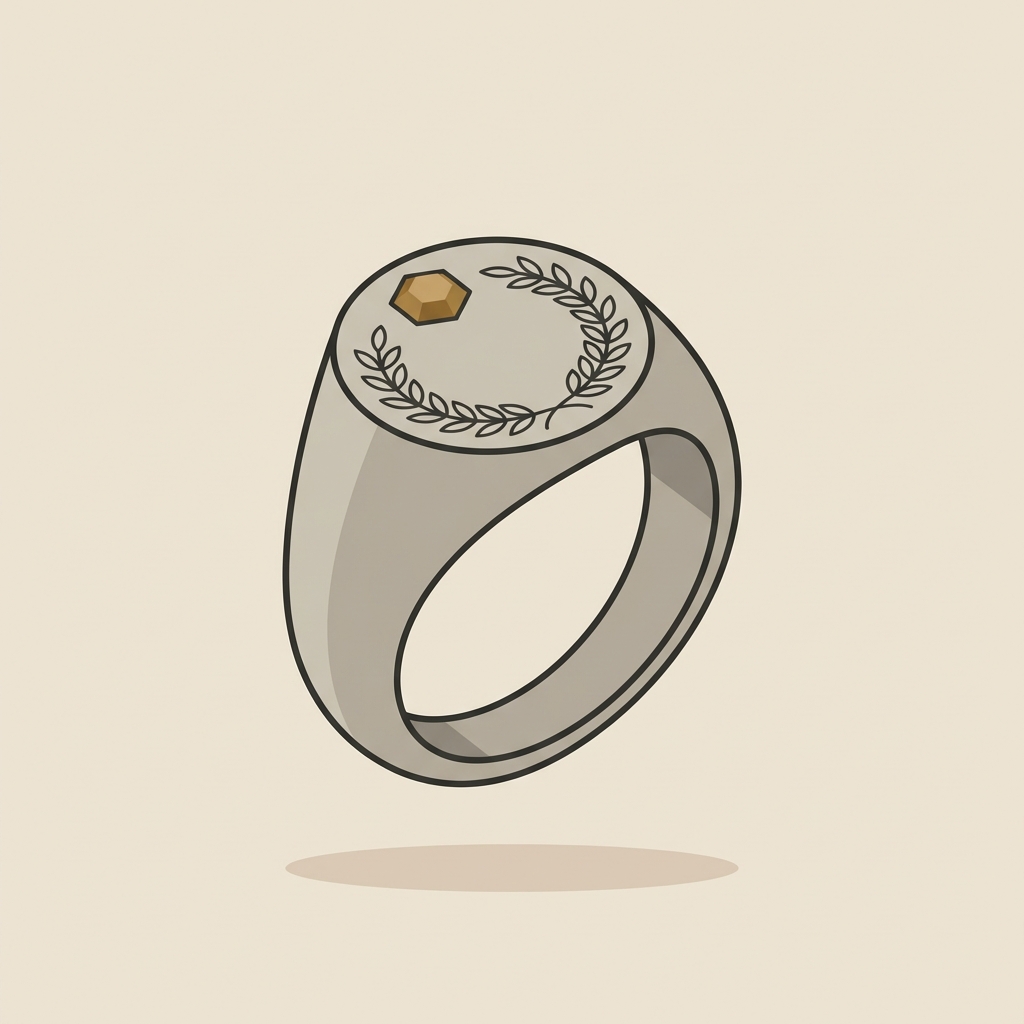
The brand offers curated ancient rings spanning Roman, Greek, Byzantine, Islamic, Celtic, medieval, and post medieval periods, and pairs select small artifacts and restoration notes with editorial context so collectors can compare motifs and documentation against museum catalogues.
When to consult specialists or scientific testing
Consult a specialist when an object has unclear or contested provenance, carries significant monetary or historical value, shows ambiguous inscriptions, or when restoration history is complex; specialists include object conservators, epigraphers and curators with relevant regional expertise Oxford Research Encyclopedia overview of seals.
Scientific tests can help with material identification and with some dating questions, but they do not replace provenance or contextual evidence; treat laboratory results as one part of a combined evidentiary approach and keep reports with the object.
Summary and next steps for readers
Quick checklist: record motif, material and measurements; compare with museum catalogues; prioritise inscriptions and provenance; check restoration notes; and consult specialists when necessary. These steps form a cautious workflow for interpreting what a signet ring is likely to symbolize British Museum rings overview.
Further reading and resources include museum catalogues and collection guides, which provide secure comparanda and technical descriptions to support careful interpretation and collecting practice.
Look for an intaglio carved into the bezel, orientation suited to making impressions, wear consistent with repeated pressing, and any documented notes describing use as a seal.
No, deity imagery often signals protection, affiliation or virtue and usually requires inscriptional or provenance evidence to support identification of a specific owner.
Ask for condition notes, restoration history, measurements, clear photos, and any provenance records or verification letters that accompany the item.