


What a gold roman numeral ring is and why it matters
A gold roman numeral ring is a ring made of gold that bears Roman numerals either engraved, incised, or set as part of an intaglio or bezel. Collectors and buyers use the phrase to describe both genuinely ancient rings and modern pieces that adopt the Roman epigraphic system for dates or personal marks, depending on the object.
Roman numerals form an epigraphic system used since antiquity and remain a widely recognized way to mark dates and numbers, which makes them especially useful when interpreting inscriptions on rings; a concise reference can resolve many common readings Encyclopaedia Britannica.
Expectations differ between historic and modern rings. In antiquities, numerals can be original features that relate to sealing, ownership, or symbolic meaning. In modern jewelry, similar marks may be added for personalization. Whether an inscription is original, later reused, or a recent personalization depends on context, documented provenance and condition notes.
For buyers and collectors, the distinction matters because it affects historical interpretation, care needs and the questions you should ask before purchase.
See curated rings and condition notes on @auroraantiqua
Aurora Antiqua presents curated ancient rings with clear condition notes and provenance context to help collectors evaluate inscriptions and makers marks.
How to read Roman numerals on a gold roman numeral ring
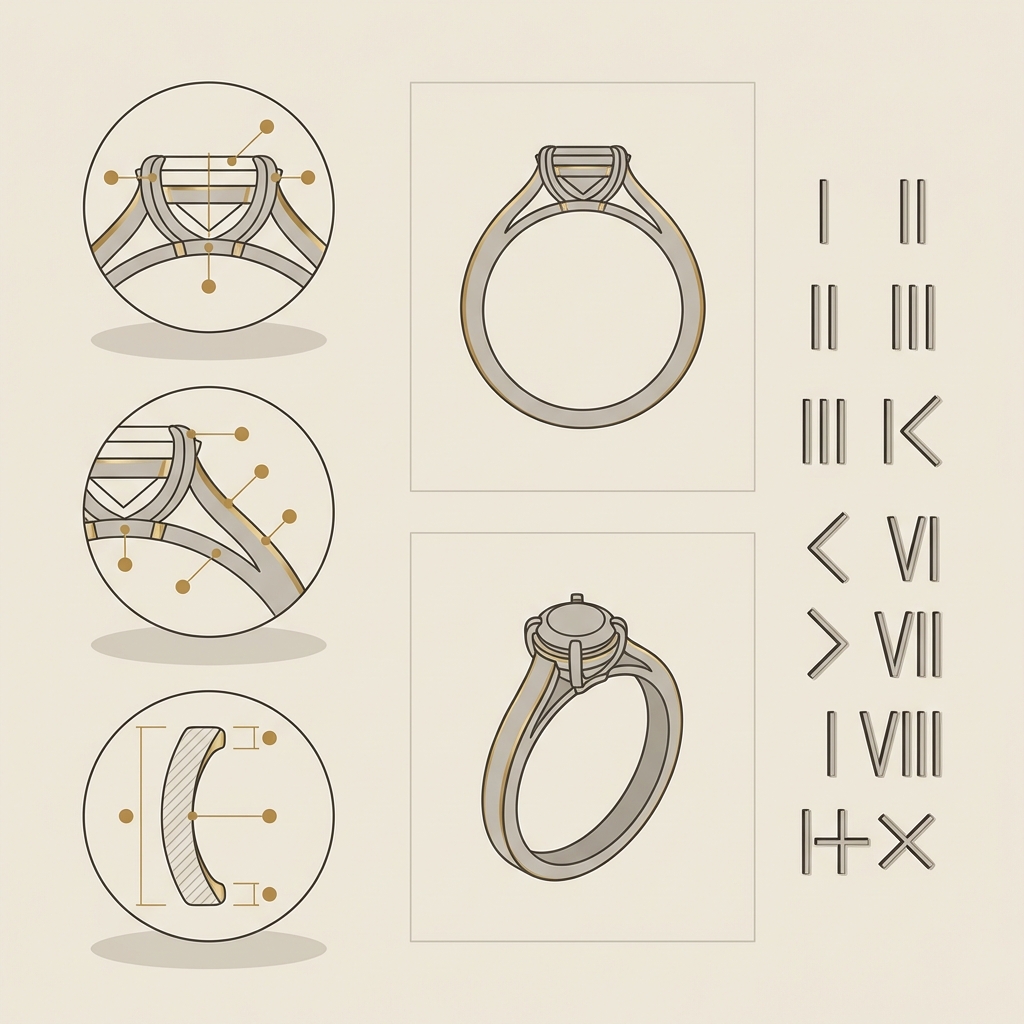
Start with the basic symbols: I, V, X, L, C, D and M, and remember the additive and subtractive rules used to form numbers. A short check against a reliable table is often enough to read most short sequences you find on rings Encyclopaedia Britannica.
Common short sequences on jewelry tend to be simple, such as dates written with fewer letters or small numbers for counting and commemoration. When you transcribe an engraving, record each letter exactly and compare it to a standard chart rather than guessing from wear.
A simple checklist to verify a numeral transcription
Use a standard numeral table for conversions
Practical conversion tips: write the inscription in a single line, apply additive rules left to right, and note any obvious truncation or damage. If numerals are worn or ambiguous, do not assume a reading; document the uncertainty and seek a specialist transcription when necessary.
Historical roles of numeral rings: Roman and later examples
In the Roman world, engraved bands and intaglios frequently served functional roles, such as seals for documents, personal ownership marks, or symbolic amulets, not merely decoration; museum research and collection documentation illustrate these multiple functions and help buyers understand possible original uses Metropolitan Museum of Art.
Later periods show continuity and reuse of Roman motifs and numeral forms, where ancient rings might be repurposed or copied in medieval and post-medieval contexts. This continuity means the same visual motif may appear across centuries, so provenance and stylistic analysis are essential for interpretation.

When a listing includes collection history, pre-sale photographs and restoration notes, those items allow closer comparison with museum examples and can indicate whether numerals are likely original or later additions. Always review documentation before forming a conclusion about function or date.
Where numerals appear on gold roman numeral rings and what placement can mean
Numerals appear in a few common locations: the outer band, the bezel edge, the shoulders near the bezel, and the inner shank. Placement can reflect function; for instance, an outer engraving is visible when worn and often intended for display, while inner-shank marks are typically private or commemorative.
Modern practice places numerals either prominently on the outer band or discreetly inside the shank as a personal inscription; this pattern is noted in contemporary guidance on engraving and personalization for jewelry GIA guidance on personalization.
Placement alone does not prove age or originality. Look for matching wear, continuity of patina across an inscription, and whether tool marks and letter forms align with period techniques. Those visual clues should be considered alongside provenance and documentation.
Modern uses: what a gold roman numeral ring can mean today
Today, Roman-numeral bands are commonly chosen for personalization: anniversaries, birthdates and memorial dates are frequent reasons to inscribe numerals on gold rings. Jewelry designers select placement and letter depth to balance visibility with longevity of the mark GIA guidance on personalization.
Design choices affect how the date reads over time: shallow surface engraving may wear faster while a deeper incised mark or an intaglio set into a bezel will retain detail longer. Buyers who want a long-lasting personal mark often discuss depth and location with a jeweler before engraving.
A Roman numeral on a gold ring can signify a date, a personal or ownership mark, a sealing function, or a modern personalization; correctly interpreting it depends on placement, patina, provenance and specialist input.
Because similar visual results can be achieved by modern engraving or by later additions to an old ring, asking for fabrication or restoration dates and photographic documentation helps separate a recent personalization from an original historic inscription.
How to tell if numerals are original, later additions or modern re-engraving
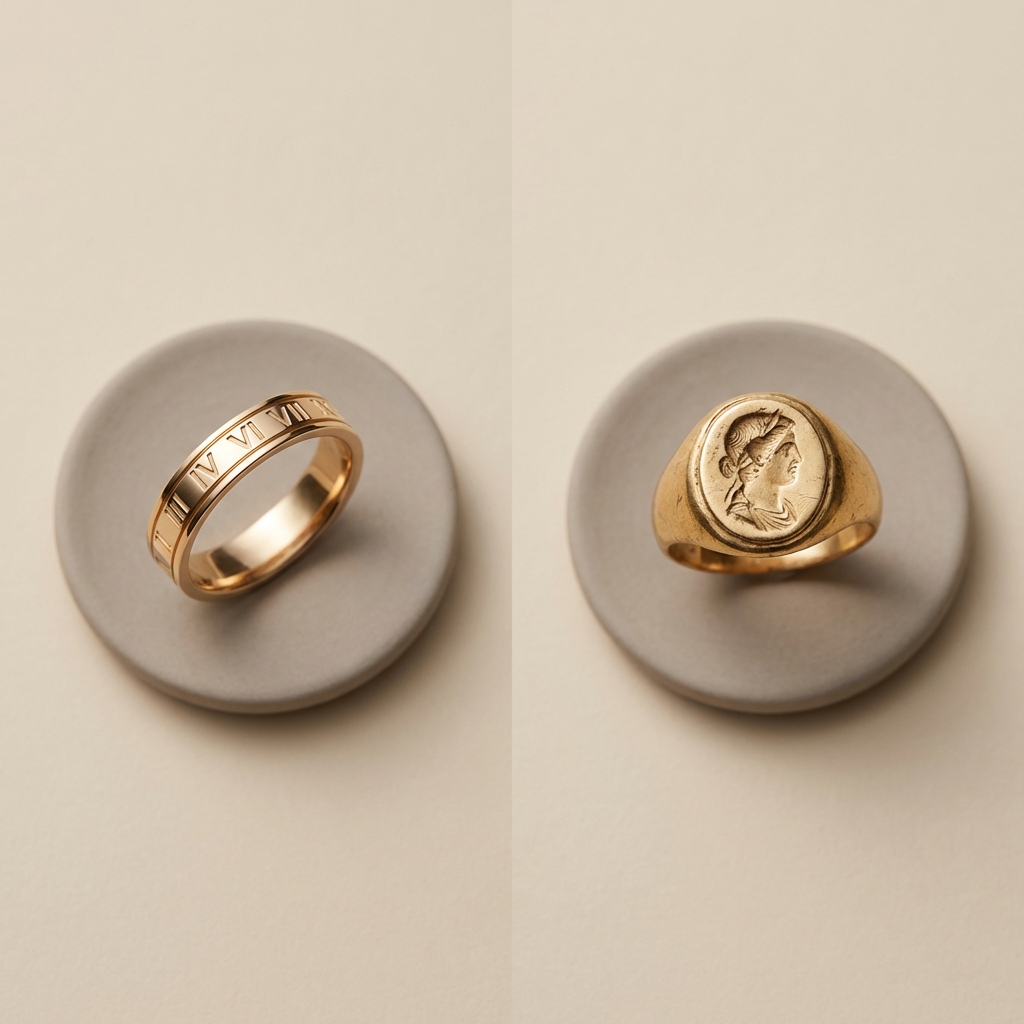
Fresh cuts, bright metal within engraving lines, or lettering that interrupts an established patina are signs consistent with later re-engraving. Conservation guidance emphasizes careful assessment and warns against altering original surfaces without documentation Canadian Conservation Institute.
Final determination often requires specialist assessment, which may include microscopic inspection, comparison with dated parallels, and, when appropriate, limited technical analysis. Sellers should disclose any known interventions and restoration notes to support buyer assessment.
Care and conservation for a gold roman numeral ring
Conservation guidance for metal jewelry, including gold, recommends non-abrasive cleaning, controlled humidity and storage, and professional assessment before attempting any cleaning or re-engraving that could disturb original surfaces Canadian Conservation Institute.
Everyday care steps include handling rings with clean hands, photographing both sides for condition records, and storing them separately to avoid scratches. Avoid household polishes on historically significant pieces, as abrasive products can remove patina and historical surface evidence.
When a ring requires more than gentle cleaning, consult a qualified conservator. Proper restoration notes should record what was stabilized, what was repaired, and what was intentionally left untouched so future owners understand the interventions.
What documentation to ask for when buying a gold roman numeral ring
Ask sellers for provenance documentation, collection history and any verification letters; UNESCO guidance and ethical buying practices recommend avoiding purchases without verifiable history, particularly for antiquities UNESCO convention guidance.
Request clear condition and restoration notes, including photos taken before and after any conservation work, and specifics on what was done. Museum collection descriptions and professional catalogues often serve as a model for the level of detail buyers should expect Metropolitan Museum of Art.
Red flags include missing paperwork, vague claims about age or origin without supporting documentation, or inconsistent condition descriptions. If crucial information is absent, consider walking away or requesting a return policy tied to documented misdescription.
Typical mistakes buyers make with gold roman numeral rings and how to avoid them
Common errors include guessing the reading of worn numerals and assuming that placement proves antiquity. Simple transcription mistakes can lead to incorrect dating or misunderstanding of a mark; use a standard table and do not infer missing letters Encyclopaedia Britannica.
Another frequent mistake is underestimating the effect of re-engraving. Buyers should request high-resolution images, clear condition notes and any pre-restoration photos to check claims about originality and age. When in doubt, seek a specialist report.
Keep communications and documentation as part of the object's collection history. Recording seller statements, photos and receipts helps future assessments and supports provenance for an antiquity if questions arise.
Practical buyer scenarios and what the numerals might mean in context
Scenario A: a modern engraved anniversary band. A seller clearly describes a recent fabrication, provides a maker's receipt and photos from the engraving process. In this case, the numerals function as a personalization and the buyer's checks should focus on craftsmanship and warranty rather than provenance GIA guidance on personalization. For fabrication details and return policy, check relevant shop information on our site Aurora Antiqua guidance.
Scenario B: an ancient ring listed with loose provenance. The listing includes patina photographs, notes on previous collection history and comparison photos of similar museum pieces. Here, review restoration notes, ask for specialist assessment if the inscription affects dating, and verify export history before purchase Metropolitan Museum of Art.
Recommended actions differ by scenario: for modern pieces, confirm fabrication details and return policy; for antiquities, insist on provenance, restoration transparency and professional reports when numerals are central to the value or interpretation.
How restoration and preservation notes affect interpretation of numerals on a ring
A robust restoration note should include exactly what was stabilized, what was repaired, and what was left untouched, using clear language similar to professional condition reports and the brand capability language used by specialist curators.
Restoration or re-engraving can change how numerals are read and therefore how a ring is dated or understood. Sellers should disclose any re-engraving or surface treatment and provide pre-restoration photos or conservator reports when available Canadian Conservation Institute.
When restoration notes are absent or vague, treat the numerals as ambiguous and prioritize documented items for purchase decisions. Transparent notes preserve the object's collection history and support future scholarship and collecting.
When to get professional help: conservators, gemmologists and historians
Map the question to the right specialist: conservation and treatment to conservators, inscription reading and dating to epigraphers or historians, and gem material identification to gemmologists. Each specialist brings methods suited to the specific uncertainty about an object Metropolitan Museum of Art.
A useful specialist report should state the methods used, note limitations, use conditional language about dating or attribution, and describe any tests performed. Balance the cost of a report against the item's value and the degree of ambiguity in the listing.
Checklist: quick steps to evaluate a gold roman numeral ring before you buy
Follow-up steps if unsure: request a specialist report, ask for pre-restoration photos, confirm the seller's return policy related to misdescription, and verify export or import documentation when applicable. Record all communications and files as part of the object's collection history.
Final thoughts: interpreting the meaning of a gold roman numeral ring
Roman numerals on a ring can indicate dates, ownership marks, seals or modern personalization; correct interpretation relies on context, documentation and specialist input rather than appearance alone Encyclopaedia Britannica.
Conservation and ethical buying points remain important: avoid abrasive cleaning, preserve patina, and insist on clear provenance and restoration notes before completing a purchase Canadian Conservation Institute.
Use the checklist in this article and seek experts when numerals influence dating or value to reduce risk and support responsible collecting.
Transcribe the letters exactly, compare them to a standard Roman numeral table, and apply additive and subtractive rules. If the inscription is worn or ambiguous, document the uncertainty and seek specialist help.
Request provenance records, collection history, verification letters, detailed condition and restoration notes, and pre-restoration photographs when available.
Yes. Abrasive cleaning can remove patina and obscure tool marks, so use non-abrasive methods and consult a professional conservator for anything beyond gentle maintenance.
References
- https://www.britannica.com/topic/Roman-numerals
- https://www.metmuseum.org/toah/hd/roma/hd_roma.htm
- https://auroraantiqua.store/products/museum-grade-roman-gold-ring-with-carnelian-intaglio-of-athenas-head-1st-century-bc-ad-rare-roman-ring-certified-artifacts
- https://auroraantiqua.store/collections/rings
- https://auroraantiqua.store/collections/ancient-roman-rings
- https://auroraantiqua.store/blogs/news/the-timeless-appeal-of-roman-jewelry-intaglio-rings-explained
- https://www.gia.edu/engraving-personalization-jewelry
- https://www.canada.ca/en/conservation-institute/services/conservation-preservation-guidance/caring-collections/metal-objects.html
- https://en.unesco.org/about-us/legal-affairs/convention-1970
- https://www.getty.edu/publications/resources/virtuallibrary/0892362154.pdf
- https://collections.vam.ac.uk/item/O377803/ring/
- https://finds.org.uk/counties/findsrecordingguides/finger-rings/