


What is an ancient amethyst ring? Definition and context
Quick definition
An ancient amethyst ring is an antiquity: a one of a kind ring made in an earlier historical period that incorporates amethyst as its primary gemstone and is offered with provenance and condition notes rather than as a modern replica. In many listings the stone and mounting will show wear consistent with age, and curators frame pieces as artifacts with documentation where available; this framing helps buyers understand whether the piece is intended for occasional wear or mainly for study and display.
See provenance and restorations on @auroraantiqua
If you are deciding whether to wear a historic piece, consider its condition notes, any restoration history, and how often you plan to handle it before making a habit of wearing it daily.
Where these rings come from and what to expect
Ancient amethyst rings typically come from archaeological finds, private collections or gathering trades that predate modern production, and they are presented by specialists who include collection history and restoration notes to inform buyers. Ancient Roman Rings collection
Because amethyst is a variety of quartz with defined physical properties, presentations often link gemstone identity to care guidance so wearers know how to handle an antiquity safely; for basic gemology and care context see the GIA amethyst overview GIA amethyst guide.

Amethyst basics: properties, birthstone status, and what that means for wear
Gemology: hardness and vulnerabilities
Amethyst is a variety of quartz and sits around seven on the Mohs scale, which makes it robust enough for many kinds of jewelry but not immune to abrasion or damage from harder materials; this hardness has direct implications for which finger you choose, because frequent knocks on a dominant hand increase the chance of surface wear. For traditional wearing recommendations see how to wear an amethyst.
Gem-care guidance notes that prolonged exposure to strong sunlight and contact with harsh chemicals can affect color and surface condition, so selecting a finger that limits routine exposure to sunlight or household chemicals is a sensible precaution for a historic piece GIA gemstone care.
Birthstone conventions and what they imply
Amethyst is widely recognized as the traditional February birthstone, and for many wearers that association guides finger choice toward personal and symbolic placement, such as the ring finger when someone wants to wear birthstone jewelry alongside or instead of a modern wedding band.
Birthstone conventions are cultural cues rather than strict rules: some collectors wear a February birthstone as a daily personal emblem while others reserve it for special occasions or display because the piece is an antiquity rather than a contemporary wearable item American Gem Society birthstone page. For wearing traditions and finger choices see traditional wearing guidance.
History: amethyst in ancient Greek and Roman rings
Signet and intaglio use in antiquity
Classical and museum literature documents amethyst use in Greek and Roman rings often as intaglio or signet stones, where the carved surface served both decorative and functional purposes in sealing and identity display; those historical uses influence how we view these rings today, especially when a stone bears an engraved motif or portrait. See related pieces in the Ancient Greek Rings collection.
The presence of intaglio or signet features can mean a ring was worn differently in antiquity than a modern fashion ring, and collectors should read descriptions carefully to understand the original function and how that affects current wearability British Museum amethyst.
Choose a finger by clarifying your intent (symbolic, personal, or practical), evaluating the ring's size, bezel and condition notes, and then matching those findings to local finger customs and daily activities to balance visibility with protection.
In classical sources amethyst carried symbolic associations including protection from intoxication, sobriety symbolism and social status signaling, and those recorded meanings can add personal resonance for a modern wearer without implying identical cultural functions across time and place Encyclopedia Britannica on amethyst.
Finger symbolism: cultural meanings and modern conventions
Ring finger and marriage customs
The ring finger is commonly associated with marriage in many Western countries, but the hand and finger used for a marital band vary by tradition, so wearing an amethyst on a ring finger may be read as a personal or symbolic choice depending on local custom.
Because left versus right usage differs by region and by cultural practice, consider where you live and how closely you want your gesture to align with marital conventions before placing a symbolic ancient amethyst ring on the ring finger Encyclopedia Britannica on wedding ring traditions.
How left versus right choices vary by region
In some traditions the right hand serves the same social role that the left hand does in other places, and non-marital gemstones may occupy fingers that carry no marital connotations; this regional variation means that choosing a finger for symbolic reasons should be informed by local practice and by how public or private you want the symbolism to be.
When there is no clear local rule, personal intent and comfort are primary: a collector who wants a visible statement can choose an index or middle finger, whereas someone seeking a quieter birthstone placement may prefer the ring finger or little finger. Some cultural guides offer specific finger recommendations for gemstones see cultural guides.
Practical guidance: choosing the finger based on ring size, bezel and daily life
When to prefer index or middle fingers for statement pieces
Large, high-bezel amethyst rings read as statement pieces and often sit best on the index or middle finger because those digits provide visual balance and reduce the likelihood of the bezel rubbing adjacent fingers.
Another practical reason to reserve index or middle placement is visibility: if the stone carries an intaglio motif intended to be seen, those fingers present the motif more clearly without crowding other rings.

When smaller or signet-style amethysts suit the ring or little finger
Smaller intaglio or signet-style amethysts with a low-profile bezel often wear comfortably on the ring or little finger where they are less likely to catch on fabrics and where the bezel sits flush with the hand, which is particularly useful when the piece shows wear consistent with age and the mounting has been stabilized rather than fully restored.
Match the ring shank and shoulders to the finger: a narrow hoop suits a smaller finger, while a broader shank gives stability on the middle finger; if the ring has been subject to previous repairs, consult the condition notes before trying it on for prolonged wear British Museum amethyst.
Left or right: how local customs change the meaning of wearing an amethyst
Examples of regional practices and how they affect meaning
Across cultures the same finger can mean different social things: the left ring finger signals marriage in some Western settings, while other regions place marriage symbolism on the right; recognizing these patterns helps avoid unintended social signals when wearing a symbolic gemstone publicly.
For non-marital amethyst wear, choosing left or right often comes down to whether you want a public signal or a private emblem; selecting the side that aligns with your intent reduces confusion in social contexts.
How to choose based on intent: symbolic, personal, or practical
Decide whether the ring is primarily symbolic, personal, or practical. If symbolic and you want social recognition, follow local customs for marital or status placement. If it is personal, wear what is comfortable and protective of the artifact. If practical, pick a finger that minimizes knocks and sun exposure.
Balancing symbolism and personal style: a quick decision framework
Three-step framework for choosing the finger
Step 1: Clarify intent. Are you wearing the piece as a birthstone, a conversation piece, a signet, or a conserved museum object? Step 2: Evaluate the ring: note size, bezel height, patina and any restoration notes. Step 3: Match the ring to daily use and local custom; prioritize a finger that balances visibility with protection.
a short checklist to clarify intent size and daily use
Use answers to pick finger
Questions to ask before you decide
Ask whether the piece has prior repairs that limit vigorous wear, whether the bezel stands proud enough to catch clothing, and whether the ring will be exposed to sunlight or chemicals during routine activities; clear answers point to sturdier fingers or reserved wear for special occasions.
When provenance and restoration notes suggest a delicate mount, lean toward less-used fingers or wear the ring only for supervised occasions rather than daily use GIA gemstone care.
How provenance, condition and restoration notes affect how you wear an ancient amethyst ring
Reading condition and restoration notes
Provenance documentation, condition notes and any verification letters form the basis for determining whether an ancient amethyst ring is safe for regular wear; sellers should provide details about past repairs and whether conservation steps were stabilizing or intrusive, because that information directly affects recommended use.
If a description notes soldered joins, replacement hoops, or added modern pins, those interventions may limit the ring's ability to withstand daily stress and should lead a buyer to choose less exposed fingers or reduce wearing frequency British Museum amethyst.
When repairs limit everyday wear
Some repairs are cosmetic and robust, while others were performed to stabilize a fragile artifact; where condition notes indicate fragile joins or adhesive use, avoid fingers that will subject the ring to bending or repeated pressure and consult a conservator for advice.
When in doubt, ask the seller for detailed photos of repair areas and for any conservation reports so you can plan to wear the piece only in contexts that respect its condition notes and restoration history GIA gemstone care.
Care and handling: cleaning, storage and daily precautions
Safe cleaning methods for amethyst and limits for ancient settings
For at-home cleaning of amethyst set in intact historic settings, gentle cleaning with a soft brush, mild soap and lukewarm water is usually recommended, while strong chemicals, steam or ultrasonic cleaners are discouraged because they can affect old repairs or the stone's color.
Professional conservation is advised for any cleaning that goes beyond gentle home care, especially when a piece has documented restoration or delicate attachments; a trusted conservator or jeweler can advise which methods are safe for a particular artifact GIA gemstone care.
Storage, sunlight and activity-related precautions
Store an ancient amethyst ring separately in a padded box to avoid abrasion against harder gems or metals, and avoid prolonged exposure to direct sunlight to reduce the risk of fading if the item remains vulnerable; these precautions help preserve both the stone and the mounting for future handling.
Limit wearing the ring during activities that might expose it to chemicals, impact, or persistent sunlight; if you plan occasional wear, select a finger that reduces those risks and follow the documented care guidance in the listing.
Common mistakes to avoid when wearing ancient amethyst rings
Assuming modern durability
A common mistake is assuming an ancient ring has the same durability as a modern piece; older mounts and historically repaired joins can be more fragile and should be treated with conservational caution rather than modern jewelry assumptions GIA gemstone care.
Corrective action: read condition notes, limit wear during heavy activity, and prioritize protective fingers when you want to wear the piece rather than display it.
Overlooking provenance and restoration details
Another frequent error is overlooking provenance and restoration details when deciding whether to wear a piece; documentation helps you judge whether a ring should be handled daily or reserved for occasional wear.
Corrective action: ask the seller for specific photos of repair areas and any conservation records, and factor those notes into finger choice and frequency of wear British Museum amethyst.
Practical styling examples and scenarios
Everyday wear examples
Scenario: a small intaglio amethyst with a low bezel. This suits the ring or little finger for everyday wear because it lies close to the hand and is less likely to catch on clothing; match it with a thin hoop and avoid heavy stacking rings on the same finger.
Scenario: a tall-bezel statement amethyst. Choose the index or middle finger for visibility and balance, and limit wear during hands-on activities to reduce risk of impact or abrasion.
Special-occasion and symbolic uses
For ceremonial or symbolic use, such as wearing a February birthstone during a family event, the ring finger is a conventional choice for many wearers who want a quiet emblem; pair with fabric-conscious clothing to reduce snag risk and consult condition notes if the piece has prior repairs.
When pairing with modern rings, leave space between an ancient amethyst and contemporary bands to avoid abrasion and visual crowding, and prefer soft inner gloves when handling the piece for display to protect patina.
How to present or buy an ancient amethyst ring with confidence
Buyer checklist
Check that listings include clear photos from multiple angles, measurements, provenance statements, condition and restoration notes, and any verification letters; these items form the essential documentation that lets you judge whether the object is suited to regular wear or should be conserved as an artifact.
Ask for close-ups of the bezel, shank and any soldered joins; if a seller cannot provide detailed condition notes, treat the purchase as primarily a collectible for study rather than a daily wearable object British Museum amethyst.
Questions to ask the seller or curator
Ask whether the ring has had past repairs, what stabilization was performed, whether the stone has been tested or identified, and what the seller recommends for occasional wear; these questions clarify how often and on which finger the piece can be safely worn.
When buying from a curated seller, rely on condition notes and any provenance documentation they provide to set realistic expectations about wearability rather than assuming modern durability GIA amethyst guide.
Conclusion: choosing the right finger for your ancient amethyst ring
Choosing which finger to wear an ancient amethyst ring balances intent, the ring's physical characteristics and local cultural context; start by clarifying why you want to wear the ring, then evaluate bezel profile, shank and condition notes, and finally match to a finger that protects the artifact while expressing your intent.
Birthstone and historical associations can guide your choice, but practical care and provenance information should determine whether the piece is a daily wearable or a reserved collectible; when in doubt, limit wear and consult the seller's restoration notes before regular use.
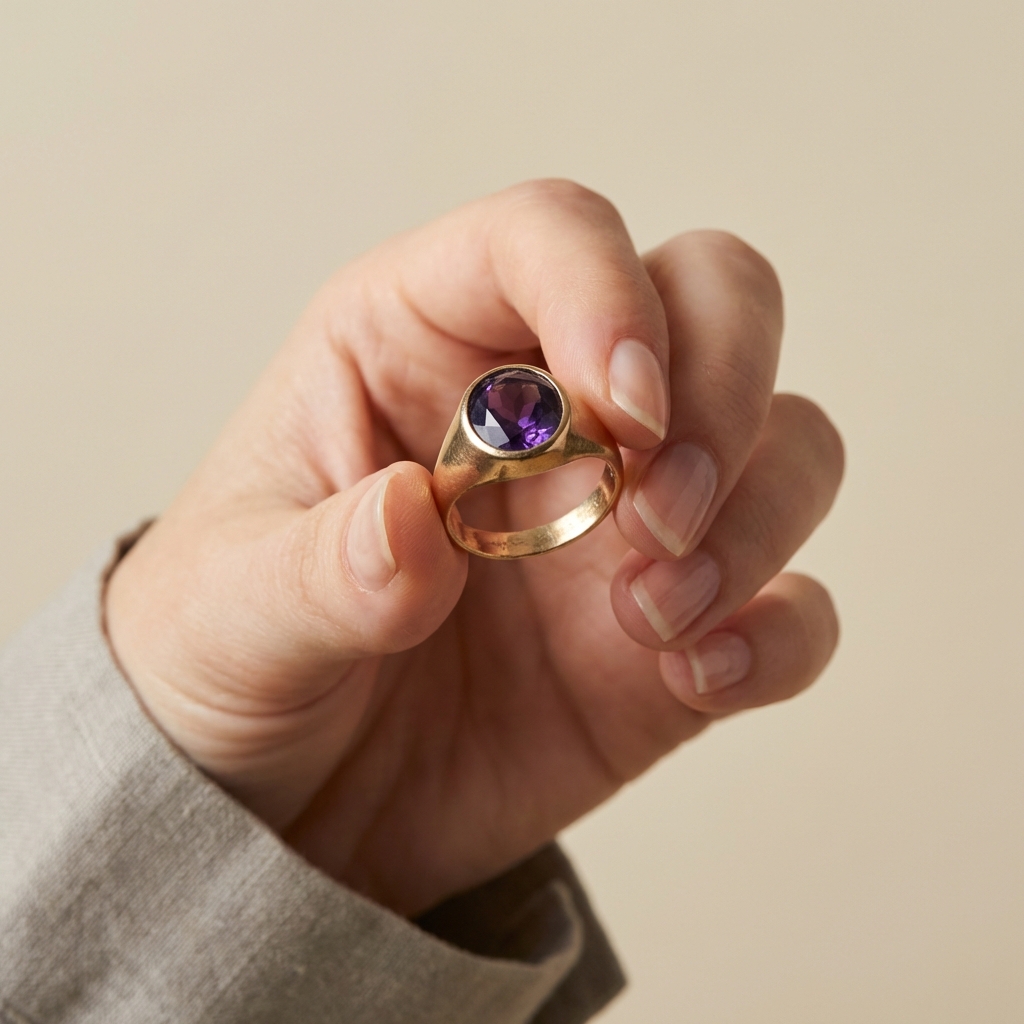
When there is no clear local rule, personal intent and comfort are primary: a collector who wants a visible statement can choose an index or middle finger, whereas someone seeking a quieter birthstone placement may prefer the ring finger or little finger.
Questions to ask before you decide
Ask whether the piece has prior repairs that limit vigorous wear, whether the bezel stands proud enough to catch clothing, and whether the ring will be exposed to sunlight or chemicals during routine activities; clear answers point to sturdier fingers or reserved wear for special occasions.
Store an ancient amethyst ring separately in a padded box to avoid abrasion against harder gems or metals, and avoid prolonged exposure to direct sunlight to reduce the risk of fading if the item remains vulnerable; these precautions help preserve both the stone and the mounting for future handling.
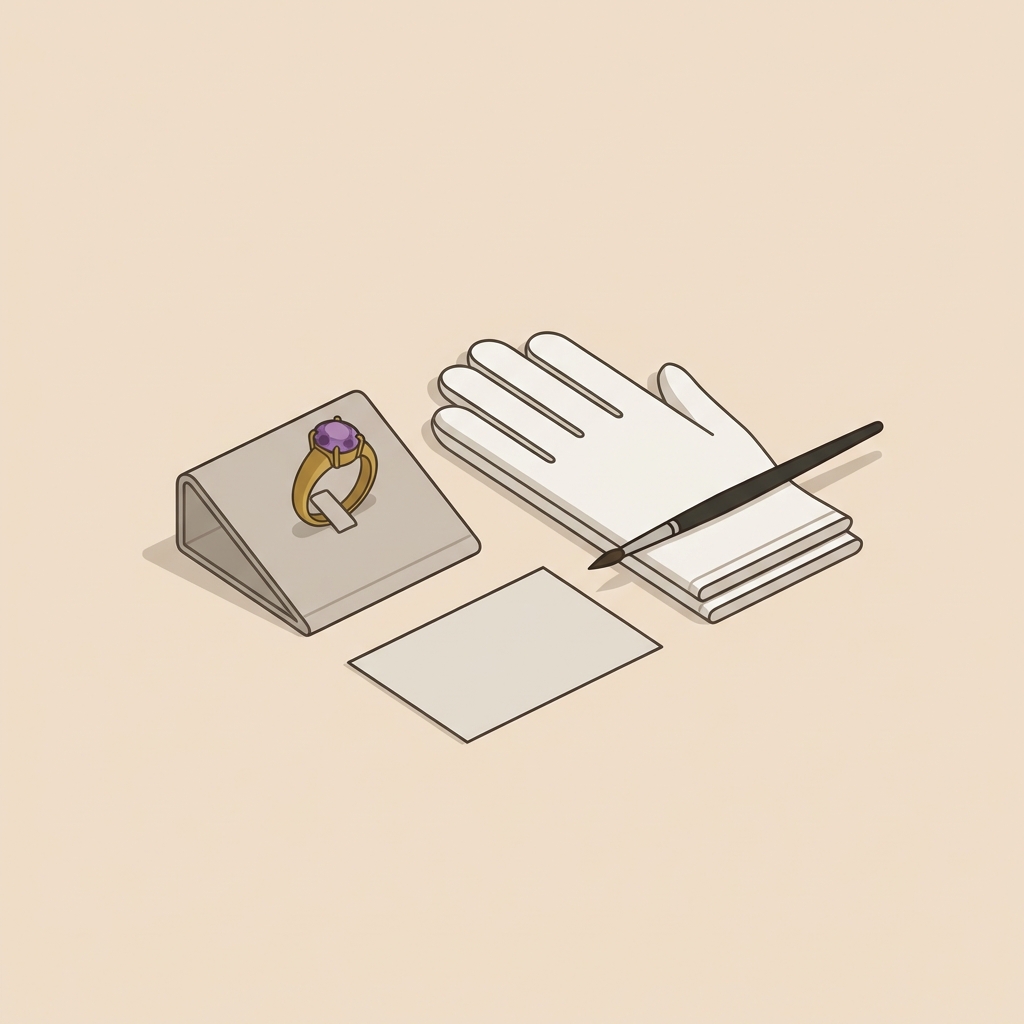
It depends on the ring's condition and restoration history; check provenance and condition notes and avoid daily wear if repairs or fragile joins are documented.
Left or right depends on local customs and your intent; follow regional traditions for symbolic wear or choose the side that offers comfort and protection.
Use a soft brush, mild soap and lukewarm water for gentle cleaning; avoid chemicals, steam and ultrasonic cleaners unless a conservator advises otherwise.