


Definition and context: what people mean by the four rings
When people speak of the four rings a woman might receive they most often mean four social and chronological types: an engagement ring presented at proposal, a wedding band exchanged at marriage, an eternity or anniversary ring given for milestone years, and an heirloom or commitment ring passed within a family or chosen to represent ongoing promise.
These four categories describe roles more than fixed designs, and modern practice shows wide variation across regions and personal taste. Contemporary reporting highlights diversification in shapes, personalization and motif choices rather than a single dominant silhouette, and buyers frequently mix styles to suit taste and lifestyle The Knot report on engagement ring trends and our rings collection.
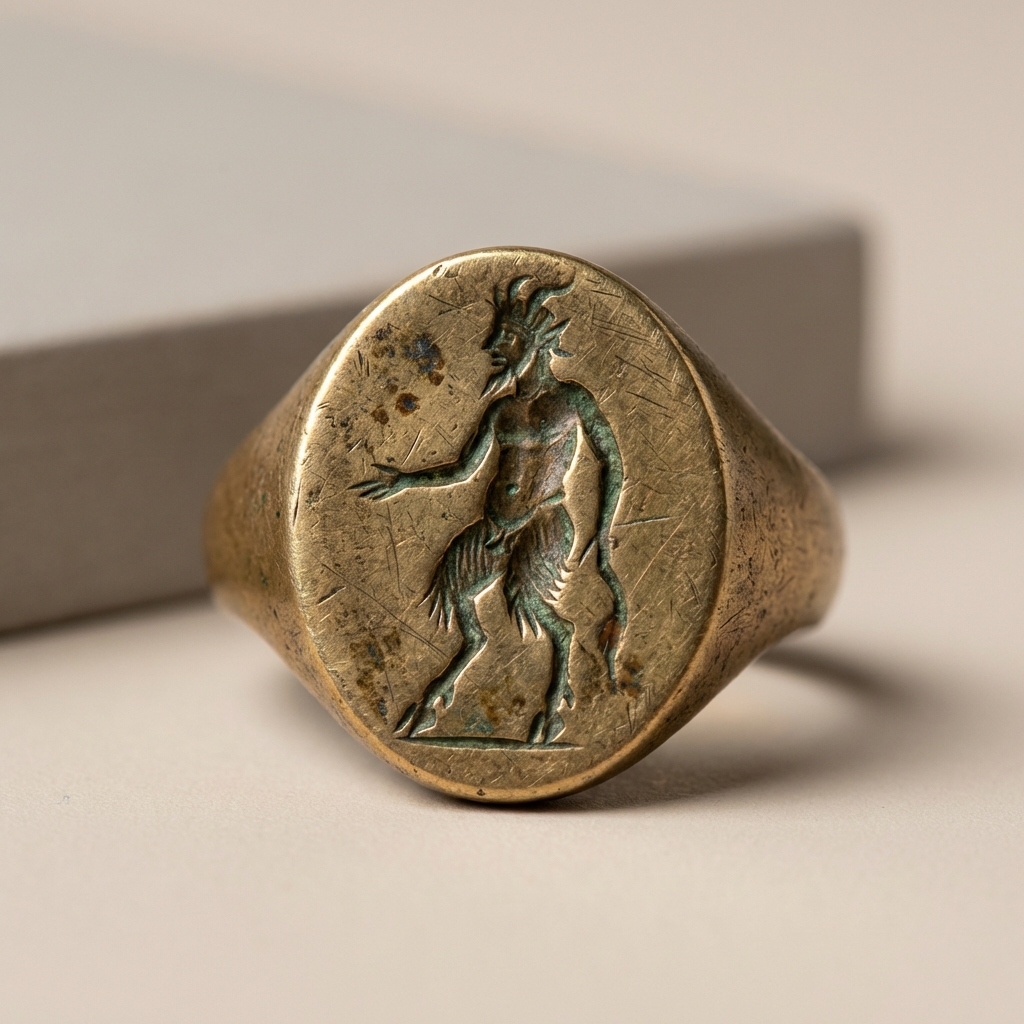
For collectors and history minded buyers, motif and provenance matter alongside social function. Classical figures like fauns appear on engraved intaglios and bezels in museum collections, a lineage that informs how modern makers and curators place and describe motifs on bands and settings British Museum collection entry on engraved motifs, the Getty catalogue on engraved gems and cameos.
Brief historical background
Historically, rings have served as personal markers of status, vows and identity in many cultures, and the specific meanings assigned to engagement, wedding, anniversary, and heirloom rings evolved over centuries as customs and legal forms changed. Museum overviews of rings emphasize long continuities in symbolic use while noting evolving fashions and materials The Metropolitan Museum overview of rings. Older treatises such as Rings for the Finger also describe these continuities.
How contemporary practice differs from history
In the twenty first century, personalization is central. Many couples and individuals choose engraved motifs, stacked rings, or mixed metals to express a shared narrative rather than following a single historical template. This shift means that choosing an engagement or heirloom ring today often blends social timing with aesthetic and conservation considerations, especially when the motif references antiquity.
The four rings explained: when and why each is given
Engagement ring, wedding band, eternity or anniversary ring, and heirloom or commitment ring each have distinct social roles. The engagement ring typically marks a proposal and may emphasize a central motif or stone chosen for its symbolism. A wedding band functions as a durable sign of marriage and is often designed for daily wear. An eternity ring is given to mark milestone anniversaries and can be full or half eternity in style, while heirloom rings are passed as family objects or chosen to anchor a personal legacy.
Contemporary choices frequently blur these categories. For example, an engraved heirloom ring may be used as an engagement ring, and an eternity band may be stacked with a wedding band. The flexibility of contemporary practice means buyers should prioritize how rings will be worn together and which motifs will remain legible or resilient under daily wear The Knot report on engagement ring trends.
Engagement ring: purpose and personalization
The engagement ring often carries the strongest single-object symbolism: it is presented at proposal and may feature a visible motif, central gemstone or an engraved bezel. Personalization is common, with classical motifs, initials or dates chosen to express sentiment. When motifs reference classical imagery, like a faun, researching museum examples can clarify likely period styles and typical placement on the bezel or intaglio, which in turn affects conservation needs British Museum collection entry on engraved motifs.
Wedding band: form, function and stacking
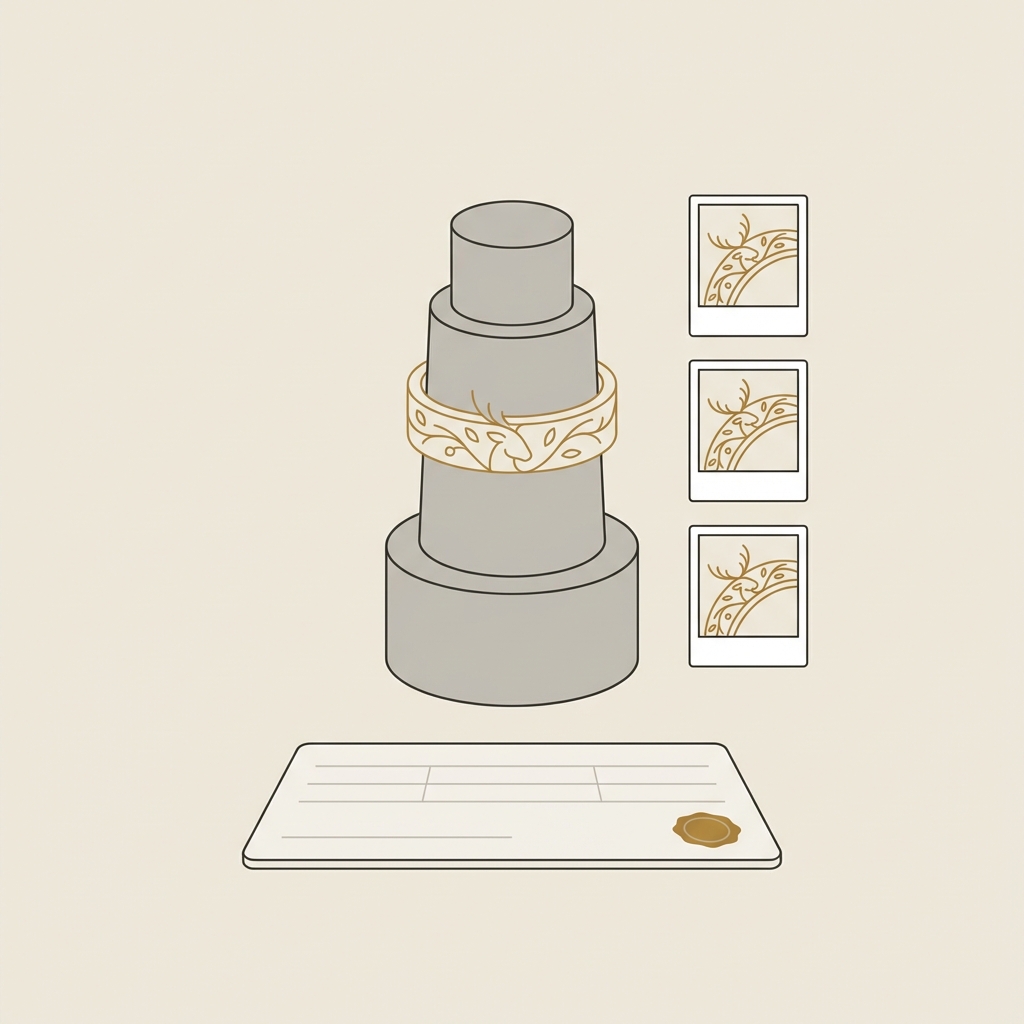
The wedding band functions as a durable sign of marriage and is often designed for daily wear. Many modern couples choose thin or contoured bands that stack comfortably with an engagement ring and, in some cases, with an eternity band. Practical stacking choices depend on profile, bezel height and how any visible engraving will meet adjacent rings, so examine how rings sit together before committing to engraving or permanent resizing.
Eternity or anniversary ring: variants and timing
Eternity rings are commonly given to mark milestone anniversaries and may be full- or half-eternity. Regional preferences influence style, with some wearers favoring continuous stones and others preferring metalwork motifs that echo an engagement ring’s engraving. Personalization and stacking are frequent modern approaches, allowing an eternity band to complement an existing set without duplicating motifs.
Heirloom or commitment ring: legacy and meaning
Heirloom or commitment rings are often chosen for their family history, symbolic imagery, or as deliberately chosen objects to anchor a personal narrative. When a ring has a documented collection history, buyers can use provenance and restoration notes to understand prior ownership and treatment, which helps set expectations for preservation and wear when placing the ring into a set or using it as a daily wearable.
See Jakob s behind the scenes on Instagram for condition notes and live close ups
See curated examples with condition notes and provenance summaries, including detailed photos and restoration details that can inform how a piece might perform as an engagement, wedding, eternity or heirloom ring.
Choosing metal and materials: comfort, conservation and long term care
Metal choice affects comfort, appearance and conservation. Gold, silver, bronze and modern alloys each age differently: gold is relatively stable and resists corrosion, silver develops a surface tarnish that can be managed, and bronze forms a characteristic patina that can be desirable but requires careful handling. Buyers should weigh wearer comfort against how a metal responds to cleaning and repair GIA guidance on jewelry care. See our Ancient Greek Rings collection for examples of material and motif combinations.
When the ring is an antiquity, material choices carry extra consequence. Bronze examples can retain fine engraved motifs but may have surface oxidation or patina that conservationists choose to preserve. Requesting restoration notes helps determine what was stabilized or repaired and what was intentionally left untouched, which in turn informs whether the object is suitable for regular wear.
Common metals and alloys
Gold alloys vary by purity and color and those choices can affect hypoallergenic concerns. Silver offers bright contrast for intaglio work but is softer than many modern alloys. Bronze and copper alloys are historically common and display patina that can enhance legibility of engraved motifs while requiring careful cleaning methods suited to the metal type.
How material affects preservation and wearer comfort
Different metals respond differently to daily exposure. Bronze and copper can react to acids or prolonged moisture, silver can tarnish, and some modern alloys include nickel which may cause sensitivity for certain wearers. Ask for material notes and, when available, testing results that clarify metal composition before committing to visible engraving or frequent wear on an older piece GIA guidance on jewelry care.
When to prefer modern alloys versus historic metals
For a piece intended for daily wear, modern alloys designed for durability and hypoallergenic performance may be preferable. For collectors seeking wearable history, original metals are often valued for their patina and historic continuity, but such pieces typically benefit from restricted wear or specialist conservation advice rather than being worn during strenuous activities.
Engraving and motif placement: where to put an image or inscription
Placement decisions affect legibility, wear and conservation. Professional guidance generally recommends the inner band for private inscriptions and the bezel or shoulders for visible motif engraving, and each choice has trade offs between privacy and visibility.
Visible placement: bezel and shoulders
Engraving on the bezel or shoulders makes a motif visible and can serve as a focal point when the ring is on display. Visible placement tends to be more exposed to abrasion and contact, so the technique used and the metal’s hardness matter for long term preservation. For motif imagery inspired by classical sources, the bezel often best preserves the design when executed with respect for the surviving material.
The four rings commonly referenced are engagement, wedding, eternity or anniversary, and heirloom or commitment rings. Choice of motif and material should balance desired symbolism with conservation needs, proper sizing and clear documentation about restoration and provenance.
Private placement: inner band inscriptions
Inner band inscriptions are intimate and generally sheltered from abrasion, which helps preserve delicate lettering or micro-motifs. Professional practice advises confirming final sizing before any permanent inner engraving, because resizing can remove or distort inner inscriptions if done later AGS guide to ring sizing.
Faun and classical motifs: lessons from museum examples
Faun and related classical motifs occur in ancient intaglios and engraved bezels preserved in museum collections, where curators note how small vignette scenes were composed to read at the scale of a finger. Those museum examples offer practical lessons: motifs with dense detail may become less legible on narrow bands, while intaglio style engravings often translate well to bezel placement where light and shadow preserve form British Museum collection entry on engraved motifs; see the Met Museum example of a faun ring Ring with head of a fauness.
Sizing, fit and professional measurement best practices
Getting the size right is practical and reversible when done before any permanent work. Best practice in 2026 is to have fingers professionally measured at normal body temperature, to account for daily and seasonal variation, and to confirm the final measurement with a jeweller before any irreversible engraving or resizing AGS guide to ring sizing.
How and when to measure
Measure at the end of the day when fingers are warm, avoid measurements after exercise or in cold conditions, and if possible take multiple readings over time. For rings that will be worn daily, factor in any expected weight fluctuation and discuss these with the jeweller so the fit remains comfortable without being loose enough to risk loss.
Seasonal and weight changes to account for
Finger size can change modestly with temperature and weight. Documenting a few measurements across seasons helps determine an appropriate compromise size. If the ring is an ancient or restored piece, discuss non invasive options for later adjustments such as sizing beads or reversible shank work that respects any prior restoration.
Confirming size before permanent work
Before inner band engraving or permanent setting changes, get a final professional size check. Permanent engraving before confirming size can lead to irreversible loss of text if resizing is required later, and some restoration histories make later resizing more complicated due to previous repairs or weak sections.
Care, conservation and restoration notes to request before buying
Clear condition notes are essential. Listings should describe visible wear, missing stones, stabilized repairs and what was left untouched so buyers can weigh handling and display expectations against intended use.
Typical restoration notes and documentation help buyers understand what was conserved and whether any repairs are stable under normal wear. Good listings explain whether stabilization was performed to stop active corrosion, whether fills were used, and which elements were left in original condition so collectors can make informed decisions GIA guidance on jewelry care.

Provenance and verification checks to request
Ask sellers for collection history, prior ownership notes, and any verification letters or condition photographs that document treatment over time. If a ring features a recognizable motif such as a faun, consult museum collection pages or specialist notes to compare style and motif treatment, and ask the seller to describe what documentation supports the dating and attribution Metropolitan Museum overview of rings.
Typical mistakes and pitfalls buyers make
Assuming authenticity without documentation is a common error. Buyers should ask for provenance details and any testing or specialist reports that support claims about age or origin before making a purchase.
Choosing engraving placement without considering wear can reduce legibility or accelerate wear. Visible engraving on shoulders or thin bezels is at greater risk of abrasion, while inner band engraving survives better but may be lost if resizing is done later GIA guidance on jewelry care.
Ignoring proper sizing or conservation advice
Skipping professional sizing or neglecting to review restoration notes before buying can make later corrections costly and potentially damaging. If a ring requires later adjustment, choose conservators or jewellers experienced with historic materials and ask how any intervention will be documented.
Practical examples and scenarios, plus a closing checklist
Scenario: choosing a faun engraved ring for an engagement
Imagine selecting a faun engraved ring as an engagement piece. Begin by assessing material and motif scale: a heavily detailed faun vignette may need a bezel wide enough to preserve the scene, while a simpler profile could work on a narrower band. Use museum references to check proportions and consider whether the ring will be worn daily or primarily for special occasions. If the piece is an antiquity, prioritize condition notes and any restoration history to judge how it will tolerate wear British Museum collection entry on engraved motifs; see our blog post the timeless appeal of intaglio rings.
Scenario: adding an heirloom ring to a stack
When adding an heirloom ring to an existing stack, check how the profiles interact. A low profile bezel tends to sit more comfortably against a plain wedding band, while a tall bezel might require a contoured companion band. Consider whether visible engraving will be partially obscured by adjacent rings and whether reconditioning or a reversible shank adjustment is advisable to allow a better fit without harming original elements.
Closing checklist of questions to ask before buying
Before purchase, ask the seller clear questions about condition notes, what restoration has been done, whether any laboratory testing exists for materials or stones, and for any available collection history or verification letters. These questions help you decide whether the ring is suited to daily wear, occasional wear, or collection display Metropolitan Museum overview of rings.
A short pre purchase checklist for ring buyers
Use this before final purchase
They typically mean engagement, wedding, eternity or anniversary, and an heirloom or commitment ring, each linked to a different timing and social purpose.
For private inscriptions, the inner band is preferred because it is sheltered from abrasion; visible motifs usually go on the bezel or shoulders.
Request clear condition notes, restoration history, any provenance documentation and advice on whether the piece is suitable for regular wear.