


What the ankh is and why it matters
The ankh, often called crux ansata in older literature, is an ancient Egyptian hieroglyph that functioned as a symbol for life and related concepts in Egyptian religion and art. Museum descriptions and scholarly summaries treat the ankh as an emblem rooted in Egyptian language and ritual rather than a Christian sign, and those reference works provide concise object histories for collectors to consult Encyclopaedia Britannica.
Understanding the ankh, its original meanings, and the contexts it appears in helps Christians and collectors separate historical description from contemporary personal meaning. When an object is shown in a collection or sold as jewelry, the documented history often frames how observers read the symbol, so simple knowledge about ankh symbolism can change how the piece is perceived.
See provenance and restoration updates on @auroraantiqua
If you plan to decide later, read the checklist in Quick decision checklist and next steps to clarify motive, provenance, and context before you wear or buy.
For readers coming from a faith community, starting with a clear, neutral definition allows conversation to move from assumption to information. The British Museum collection entry and other major catalogues treat the ankh as a non Christian emblem with a long, well documented history in Egyptian art, which is helpful when explaining a piece to others.
How the ankh was reused and reinterpreted over time

The visual form of the ankh did not vanish with pharaonic religion; it continued to appear and to be reinterpreted across late antiquity, Byzantine material culture, and in modern revivals. Museums and object histories show examples where the form was adapted, copied, or repurposed in later artistic contexts, which means a surviving object marked with an ankh may have several layers of meaning rather than a single origin The Metropolitan Museum.
In the modern period, the ankh gained new associations through Egyptian revival styles, esoteric movements, and popular jewelry markets, and these afterlives shape contemporary readings. A pendant purchased as a fashion piece in the twentieth century can carry revivalist or aesthetic associations that are distinct from its ancient linguistic role.
For collectors of antiquities, that history of reuse matters: collectors of antiquities can use provenance and clear documentation to show whether an object is a pharaonic era amulet, a Byzantine reuse, or a modern revival piece. Each category has different ethical, legal, and pastoral implications, and that is why accurate listings and condition notes are central when the object circulates as wearable history.
How Christian traditions typically approach non Christian symbols
Across Catholic, Orthodox, and Protestant traditions there is no single, universal juridical ban recorded as of 2026 that expressly forbids Christians from wearing ankh symbols; responses tend to be decentralized, pastoral, and contextual rather than uniformly legalistic. Surveys of denominational and pastoral commentary show that advice often emphasizes motive, witness, and local expectations rather than the object in isolation Christianity Today and Catholic Answers.
Pastoral guidance commonly draws a distinction between private cultural or historical appreciation and devotional use that could imply worship of another tradition. That pattern appears in denominational commentaries and in practical guidance for congregations: many advisors suggest discussing unusual symbols with a pastor when public witness is involved.
It depends on motive, context, and provenance. Many Christian traditions treat such cases pastorally rather than legally, so clarifying intent, keeping documentation, and discussing concerns with a pastor are practical steps.
This pastoral, case by case approach leaves space for personal conscience while encouraging conversation where an object might confuse or distract a community. That balance aims to respect both religious convictions and historical curiosity.
Comparing a historic medieval cross and ancient non Christian symbols
Historic medieval Christian crosses have a long liturgical and devotional history; a medieval cross necklace typically signals a Christian connection, whether personal devotion, cultural identification, or historical interest. Because of that established association, wearing a documented medieval cross usually elicits more uniform reactions in church settings than a non Christian emblem would The Metropolitan Museum.
By contrast, an ancient ankh carries a non Christian origin, so observers may read it in different ways depending on their own background, local church norms, and the context in which it is worn. This difference in public perception is the main reason many commentators advise clarity of intent when non Christian symbols are worn in mixed or public environments. See also local denominational discussions such as Ankh - Christian Resource Centre.
Why a medieval cross necklace often carries different expectations
A medieval cross necklace, because of its clear association with Christian devotional practice and its documented place in Christian material culture, usually does not require the same explanatory conversation a non Christian symbol might. Where the object is shown with provenance and condition notes that link it to Christian contexts, that documentation reinforces the expected meaning and reduces the potential for misunderstanding.
Decision criteria: a practical framework for Christians considering an ankh
When deciding whether to wear an ankh, start by naming your motive. Are you drawn to the object for historical interest, aesthetic reasons, cultural connection, or devotional use? Pastoral sources recommend making this distinction explicit because motive shapes both private conscience and public witness The Gospel Coalition.
Second, assess the context in which you plan to wear the piece: casual wear, workplace, worship, or public events each carry different expectations. Wearing an ankh to a worship service without explanation may raise questions; wearing the same pendant privately or as part of a historical collection is often treated differently.

Third, consider provenance and documentation. If the object is presented with clear collection history, provenance statements, and condition notes, that information can change how others read it and may influence a pastor or community leader to regard the piece as a historical object rather than a devotional emblem. Asking for restoration notes and provenance is both an ethical step for collectors and a pastoral step for those explaining the object to others Journal of Egyptian Archaeology.
Finally, when in doubt, speak with a trusted pastor or leader about how your community frames public witness; pastoral conversations tend to focus on clarity of intention and mutual respect rather than on formal bans.
Common mistakes and misunderstandings to avoid
A frequent error is assuming motive from the object alone. Observers can misread intention if no context is offered, so avoid letting an amulet or pendant stand as the sole explanation of your stance or belief. Clear, simple language about why you wear an item reduces misunderstanding and conflict.
Another common mistake is treating surface appearance as proof of dating or origin. Without documentation, claims about period, workshop, or material identification are uncertain; collectors and wearers should avoid definitive statements about dating unless backed by provenance or specialist reports Journal of Egyptian Archaeology.
Also watch for poorly recorded restoration. Restoration notes can reveal whether a piece was stabilized in the past, whether elements were replaced, or whether patina is original; these details matter for ethical collecting and for explaining an item to others who might assume a religious or devotional function.
Provenance, ethics, and conservation for ancient ankhs and rings
Provenance and documentation are central when an object leaves its original context and enters the market. Clear collection history and verification letters help buyers and communities understand where an object came from, which is important both for legal clarity and for pastoral honesty. For many collectors, provenance is the primary means of distinguishing an ancient artifact from a modern revival.
Condition and restoration notes tell you what has been stabilized, repaired, or left untouched. Those notes belong with the object and should be retained when the piece changes hands; transparent condition notes reduce the chance of misinterpretation and support ethical stewardship of artifacts Encyclopaedia Britannica.
Quick checklist to request provenance and condition details before purchase
Ask for scanned documentation and dates
Legal and ethical considerations, including export and import rules, vary by jurisdiction and the documented history of the object can affect legality. Sellers and buyers alike should treat provenance as a due diligence item and consult specialists if export history is unclear.
Practical guidance for wearing an ankh as jewelry
Private appreciation and public display require different approaches. If your interest is historical, wearing an ankh as part of a curated outfit or a private collection is largely a matter of personal taste; documenting the object with condition notes and a brief provenance statement can make private display less likely to be misunderstood.
If you plan to wear an ankh in worship or at church events, be prepared to explain your motive briefly. Many pastors and commentators recommend a short, respectful explanation that locates the object historically and clarifies that it is worn for interest rather than devotion to another faith Christianity Today and Christianity.com.
When you expect questions, practice a few concise responses that stress historical interest, provenance, and the difference between cultural appreciation and devotional practice. That framing helps protect both your conscience and the congregation s sense of communal witness.
Short case studies and scenarios
Scenario 1: Wearing an ankh to a church event. A wearer who enters a small group meeting with an ankh pendant might prompt curiosity. If the wearer explains that the pendant is an ancient object shown in the family collection and provides a brief provenance note, most conversations move from suspicion to interest. The presence of clear documentation often changes the tone of the exchange The Metropolitan Museum.
Scenario 2: A collector displaying an ancient ankh at a meeting. When an ankh appears in a display with condition notes and restoration information, viewers are invited to treat it as an artifact. Provenance shifts the frame from religious practice to material history and can reduce mistaken assumptions about worship or syncretism.
Suggested response scripts emphasize humility and information: a short line about historical interest and provenance usually suffices, followed by an offer to share documentation if people want to learn more.
How to discuss concerns with your pastor or community
Bring questions that focus on motive, witness, and congregational norms. Useful prompts include: How might my wearing this item affect others? Would a brief explanation before worship prevent confusion? Are there local customs I should respect? These concrete questions open a pastoral dialogue rather than a defensive argument The Gospel Coalition.
Remember that pastoral responses are usually contextual and aimed at mutual understanding. A pastor may invite you to consider where and when to wear a symbol or to provide a short explanation when it is present in communal worship.
When you share documentation and condition notes during the conversation, you help move the discussion from speculation to fact. That practice supports both ethical collecting and pastoral trust.
Caring for ancient jewelry and preserving context
Simple conservation steps protect an ancient pendant from further damage: avoid harsh chemicals, do not attempt amateur repairs, and store pieces in stable, dry conditions away from strong light. When in doubt, consult a conservator for advice rather than attempting restoration yourself.
Keep provenance, condition, and restoration notes with the object. A small folder or a scanned file that travels with the piece provides future owners and pastors the clarity they need to understand the artifact s background. That paperwork is often the single most helpful resource when an item raises questions about intent or origin Journal of Egyptian Archaeology.
Legal and ethical considerations when buying or wearing antiquities
Provenance can affect both legality and ethics. Objects with unclear or undocumented export histories may carry legal risks, and reputable sellers typically disclose known collection history and any limitations on transfer. Treat provenance as essential for legal and ethical clarity rather than optional background.
Sourcing from sellers who provide condition notes, restoration notes, and documentation helps reduce the risk of participating in illicit trade. When uncertainty remains, seek specialist advice; this article does not provide legal counsel but encourages due diligence and caution when provenance is incomplete Encyclopaedia Britannica.
Quick decision checklist and next steps
Checklist summary: 1) Name your motive, 2) Note the context where you will wear the piece, 3) Request provenance and restoration notes, 4) Consult a pastor if public worship is involved, 5) Keep documentation with the object for future clarity.
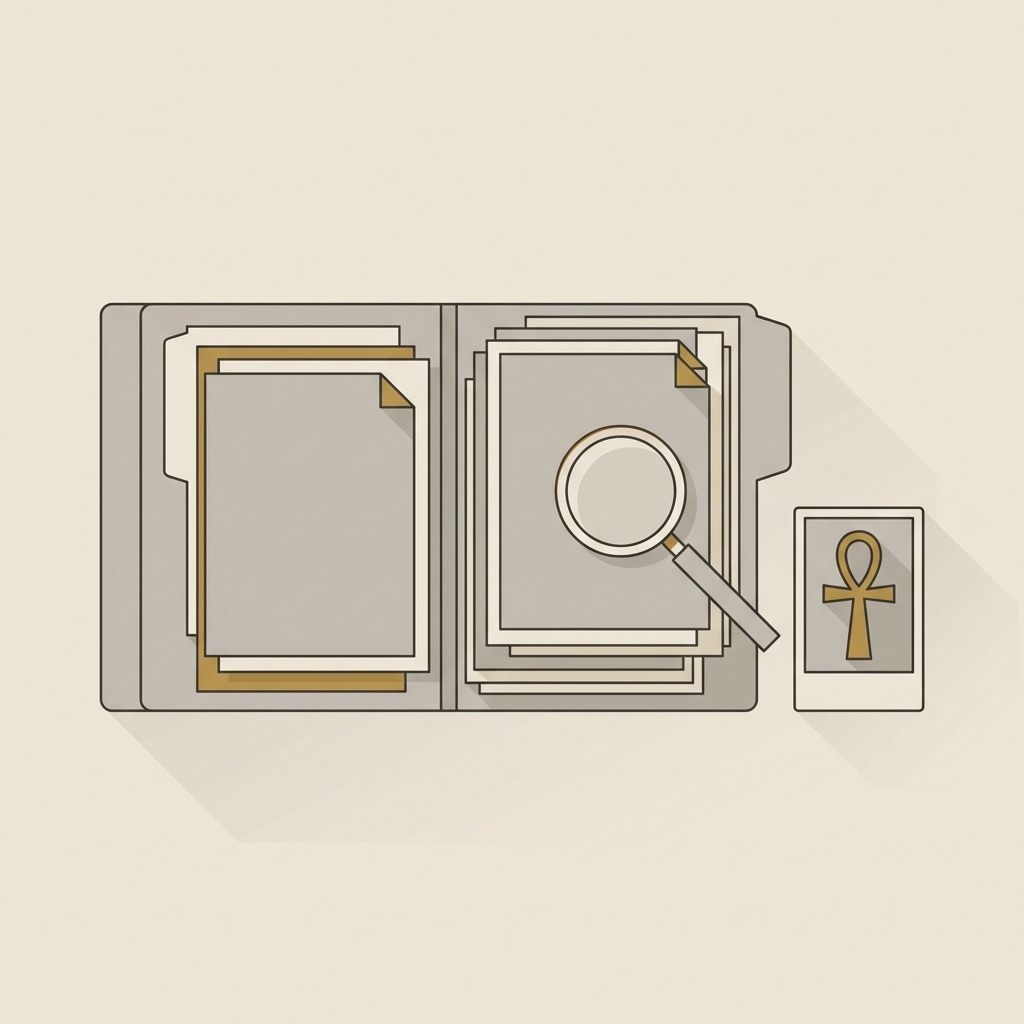
Where to find trusted documentation: ask the seller for provenance records, verification letters, and high resolution photos showing condition and patina. If possible, request scanned copies of any restoration or export paperwork; these items are essential conversation tools when explaining the piece to others. You can ask the seller or request documentation through the seller contact process.
Next steps include practicing a short explanation for public settings and storing documentation with the object so that future owners and community leaders can assess the piece with the necessary information.
Closing summary and respectful guidance
The ankh is non Christian in origin but has varied modern meanings due to historical reuse and revival. That background, together with motive, context, and provenance, should guide a Christian s decision about wearing the symbol. Museums and scholarly resources establish the ancient origin and later afterlives of the form, which helps ground conversations in fact rather than assumption Encyclopaedia Britannica.
In practice, clarity of intent, transparent documentation, and pastoral conversation are the most helpful steps. Whether you wear a historic medieval cross necklace or an ancient ankh, honest explanation and good provenance are the practical measures that protect both conscience and community.
Wearing an ankh does not automatically indicate conflict; many traditions focus on intent and context. Discussing motive with a pastor and sharing provenance can clarify concerns.
Yes. Clear provenance and condition notes often shift perception toward historical interest rather than devotional use, and they support honest conversation with community leaders.
If a symbol is likely to be misunderstood in a worship setting, consider not wearing it there or offer a brief explanation; consult a pastor for specific community guidance.
References
- https://www.britannica.com/topic/ankh
- https://www.metmuseum.org/art/collection/search?page=1&searchField=All&ft=ankh&what=All
- https://www.christianitytoday.com/articles/2024/can-christians-wear-symbols-from-other-religions.html
- https://www.thegospelcoalition.org/article/wearing-cultural-symbols-pastoral-perspective/
- https://auroraantiqua.store/products/authentic-medieval-crusader-era-bronze-cross-orbis-10th-14th-century-ce-christian-pendant-medieval-cross-pendant
- https://www.jstor.org/stable/egyptian-ankh-collection-2020
- https://auroraantiqua.store/collections/artifacts
- https://www.catholic.com/magazine/print-edition/the-christian-code
- https://crcbermuda.com/reference2/signs-and-symbols/ankh
- https://auroraantiqua.store/collections/medieval-pendants
- https://www.christianity.com/wiki/cults-and-other-religions/what-is-the-meaning-of-the-ankh-symbol-does-it-have-a-christian-origin.html
- https://auroraantiqua.store/pages/contact