


What cincin emas roman means and why context matters
The term cincin emas roman commonly appears in listings for ancient rings and is often used to describe a Roman gold ring or an item presented as such. For collectors the phrase signals an ancient ring with historical styling, possible iconography such as intaglio or deity portraits, and physical signs of age like patina and wear consistent with age. When a seller uses cincin emas roman, read the description as a starting point rather than a final conclusion; visual and descriptive clues help prioritize which tests to run and which experts to consult.
Descriptions that include condition notes, restoration notes, and any provenance or collection history are especially useful. Provenance and documentation are part of the interpretive puzzle because compositional tests show what the metal contains but do not by themselves explain how the object was used, repaired, or collected over centuries. For guidance on how hallmarking and documentation play into identification see the GOV.UK overview on hallmarking and assaying for legal frameworks GOV.UK hallmarking guidance.
Visual features such as iconography, bezel shape, and the presence of an intaglio help situate a ring in a stylistic period and can indicate whether laboratory testing is necessary to resolve questions. In many cases these contextual details can indicate whether a ring warrants destructive testing or whether non-destructive approaches are preferable. Keep in mind that hallmarking systems vary by jurisdiction and the absence of a hallmark does not automatically mean an item is not genuine.
Quick at-home checks you can do safely
Start with low-risk screening to flag obvious non-gold items. The magnet test is a simple first step: hold a strong magnet near the ring and note any attraction, since most gold alloys are not magnetic. A clear pull usually indicates a magnetic core or heavy ferrous inclusion rather than solid gold, while a non-magnetic result does not confirm purity. For an overview of simple screens and their limits consult the Gemological Institute of America resources on testing GIA testing overview.
Next, use heft or a scale to compare the ring to a same-size solid gold reference or a reputable weight chart, and examine stamps or markings with a loupe. Heft checks can indicate non-gold cores or heavy plating when weight is unexpectedly low, but they cannot determine karat precisely. A loupe helps you read small marks and inspect edges for signs of plating, such as flaking or an exposed base metal.
See behind the scenes at @auroraantiqua
If you want a simple printable checklist for initial screening or would like to view curated listings with condition notes to compare with your own piece, download a screening checklist or browse curated listings for examples.
Be cautious about scratch tests and abrasive checks, which can damage a ring and are not recommended for historically significant pieces. These at-home methods are preliminary screens to help decide if professional analysis is needed rather than definitive proofs of authenticity. If initial screens raise questions, plan the next steps around conservation and non-destructive testing rather than aggressive home procedures.
Hallmarking: what marks tell you and their limits
Official hallmarks from assay offices are strong legal indicators of gold purity in jurisdictions with mandatory hallmarking, and they are intended to certify karat or fineness according to local rules. Where consumers rely on hallmark systems, an assay office mark is meaningful; however hallmarking practice differs globally and not all historical or cross-border items carry modern assay marks. For context on how hallmarking functions in regulated systems see The Goldsmiths' Company Assay Office explanation Goldsmiths' Company hallmarking.
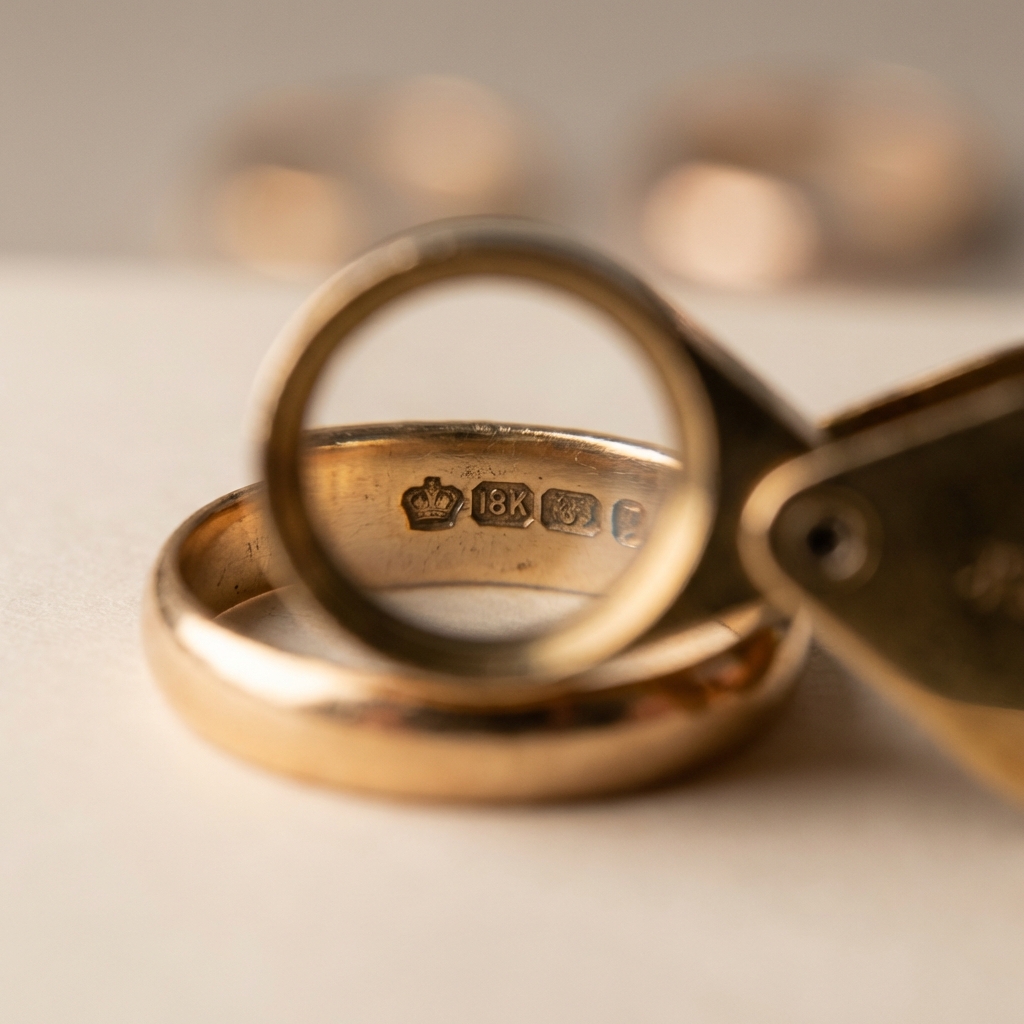
When a seller cites a hallmark, ask for a clear photograph of the mark and an explanation of which assay office or legal system applied the mark. Treat hallmark evidence as one input among condition notes, provenance, and compositional testing rather than a standalone guarantee.
Chemical tests: nitric acid and when to avoid them
Nitric acid spot tests work by applying acids of known strength to a small exposed area or freshly scratched spot and observing reactions that help approximate karat. Different acids are used against an acid-resistant reference streak to suggest whether an alloy behaves like 24k, 18k, 14k, or lower karats. The method can be informative for quick karat approximation but it is imprecise and can be misleading on plated or surface-treated items.
Because acid testing uses hazardous chemicals and can harm finishes, stones, or historical patina, it is best performed by trained users or avoided for fragile pieces. For safety guidance on nitric acid handling and PPE consult the NIOSH pocket guide NIOSH nitric acid guidance.
Determine authenticity by combining provenance and condition notes with staged testing: begin with safe at-home screens, move to non-destructive pXRF if needed, and reserve accredited laboratory assays for legal or conservation certainty.
If a ring shows a stable, desirable patina or has documented restoration notes, do not apply acid tests. Acid can remove surface layers, damage soldered joints, or harm adjacent gemstones, and that destruction is irreversible. For historically significant items favor non-destructive options or seek advice from a conservator before any chemical testing.
Portable XRF and non-destructive instrument options
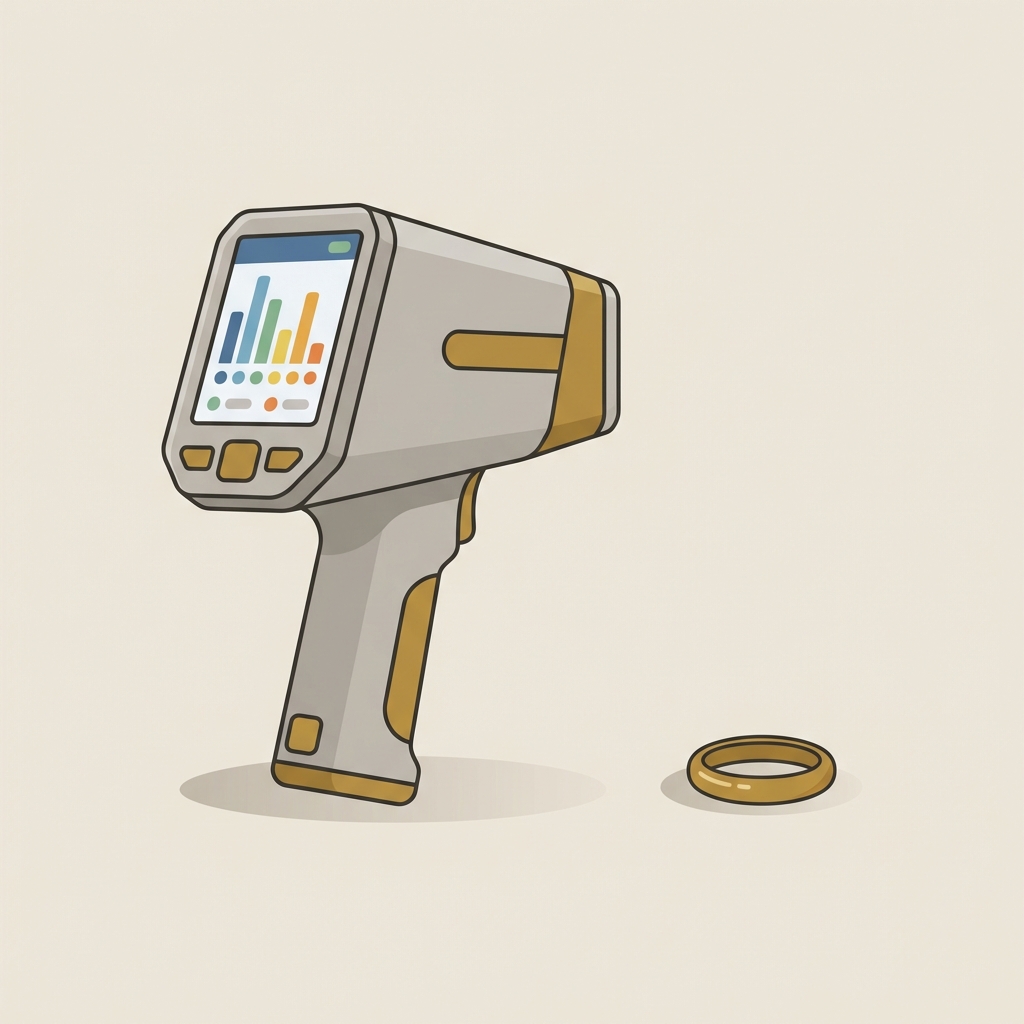
Handheld XRF spectrometers are widely used by museums, reputable dealers, and conservation labs to provide non-destructive elemental analysis that estimates gold content and reveals alloying elements. pXRF reports are useful screening tools because they do not require sampling and can rapidly show elemental presence, which helps narrow down whether an alloy is consistent with expected compositions. For an overview of pXRF methods and applications see the NIST discussion on XRF NIST overview on XRF, and further practical discussions at Thermo Fisher Thermo Fisher and Evident Scientific Evident Scientific.
Interpreting pXRF requires care. Surface condition, corrosion, surface enrichment, or previous repairs can bias results, and calibration and operator skill affect accuracy. A pXRF reading that shows a high gold signal is informative but not definitive for karat without expert interpretation; conversely, surface plating or contamination can make alloys appear richer than they are. For discussions on distinguishing genuine and plated pieces see guidance on XRF limits.
For ancient rings a pXRF operated by an experienced conservator or an accredited practitioner is often an appropriate next step after at-home screening. It is a non-destructive compromise between home tests and full laboratory assays, and it helps decide whether destructive or more costly lab work is justified.
When to ask for a full lab assay: fire assay and ICP-MS
Fire assaying and laboratory techniques such as ICP-MS or LA-ICP-MS remain the definitive methods for exact gold purity and trace element profiling when legal or conservation certainty is required. These methods provide precise karat information and can help with trace element analysis that sometimes supports provenance questions, although interpretation requires specialists. For methodological context and when these assays are used see the NIST overview of laboratory elemental analysis NIST overview on XRF.
Choose a full lab assay when the item has high monetary or historical value, when provenance is contested, or when legal documentation is needed for sale or export. Accredited labs provide reports that list methods, calibrated reference standards, and uncertainty estimates-documents you should keep with condition notes and restoration records. Request a written report that explains methods and results in plain language if possible.

Be prepared for tradeoffs: fire assays are destructive at microgram scales and typically used only when absolute accuracy is necessary and a small sample can be ethically taken, while LA-ICP-MS can provide trace element profiles with minimal removal but still requires lab access. Always discuss sampling, potential conservation impact, and reporting standards before authorizing laboratory work.
A practical decision checklist for evaluating a cincin emas roman
1. Review documentation first, including collection history and any prior lab reports. Clear photos and condition notes can answer many questions without testing. 2. Perform safe at-home screening: magnet test, heft, and loupe inspection. 3. If screens raise concerns, select non-destructive professional options such as pXRF. 4. Reserve laboratory assays for high-value, legal, or conservation-sensitive cases. This ordered approach helps limit unnecessary risk to patina and structure while prioritizing evidence gathering.
When results conflict, weigh provenance and condition notes alongside compositional data. For example a well-documented ancient ring with wear consistent with age but unclear surface readings may still merit a professional non-destructive screen before any invasive test. Keep written records of all observations and test reports so conservation decisions remain transparent.
Common mistakes and pitfalls when testing gold
A common error is performing acid spot tests on fragile or historically important rings without considering the conservation cost. Acid can alter surface finish and remove patina that carries historical information, and once removed it cannot be restored. Another frequent mistake is over-reliance on a single method, such as assuming a non-magnetic result alone proves authenticity.
Surface treatments and contamination can mislead XRF and visual checks, producing readings that seem inconsistent with expectations. Interpreting instrument output without context or expert input increases the risk of incorrect conclusions. Document any visible restoration notes before testing, because repairs can introduce modern solder or alloys that change results.
A short screening checklist for initial visual and handling checks
Use before any chemical or invasive test
To avoid these pitfalls, prioritize preserving condition notes and consult conservators for historically significant items. When in doubt, choose non-destructive professional screening and keep communication with the seller or collection manager open so that any tests performed are documented and reversible where possible.
Reading real reports and condition notes: practical scenarios
Scenario A, a modern plated ring: a simple pXRF or loupe inspection may show a discrepancy between surface gold readings and weight, and a loupe may reveal edge wear exposing a different core metal. In that case a combination of visual evidence and a pXRF screen often clarifies that the piece is plated rather than solid gold. Consumer-focused guidance on initial signs and when to seek a pro can help navigate such cases Consumer Reports how to tell if gold is real, and our discussion of intaglio rings is available in the blog the timeless appeal of Roman jewelry.
Scenario B, an ancient ring with provenance and a pXRF screen: if a ring described as cincin emas roman carries collection history and restoration notes and a pXRF shows an alloy consistent with expected Roman gold compositions, treat the pXRF as supportive rather than dispositive. Combine the pXRF output with condition and documentation to decide whether further trace element profiling or a lab assay is needed for legal or conservation certainty.
When reading pXRF summaries ask whether readings were taken on a cleaned or uncleaned surface, whether calibration standards were used, and whether operators noted repairs or surface enrichment. These contextual details affect interpretation and will guide whether a lab assay or conservation consultation is the appropriate next step.
Next steps and responsible buying for collectors
Request clear, high-resolution photos showing hallmarks, marks under the bezel, and solder joints, together with measurements and weight. Ask sellers for condition notes, restoration notes, and any provenance or collection history and retain copies of any lab reports with the object record. Documentation is the primary trust layer collectors should use when evaluating an ancient ring and it helps determine the most appropriate testing pathway. For more on our rings browse the rings collection.
If you plan to buy or conserve a cincin emas roman, organize all documentation and request an accredited lab report when legal certainty is needed for sale, export, or conservation decisions. Keep condition photos before and after any testing and consult a conservator about sampling choices so you protect historical information while pursuing compositional certainty.
A magnet test only screens for ferrous cores and obvious non-gold materials. It cannot confirm karat or detect sophisticated plating, so treat it as a first step rather than a definitive test.
Nitric acid tests involve hazardous chemicals and can damage finishes or gemstones. They are not recommended for historically significant pieces and should be done by trained users or avoided in favor of non-destructive methods.
Request a full assay when you need legal certainty, when a piece is high value, or when provenance questions are unresolved. Accredited lab reports are the standard for precise purity and trace element profiling.
References
- https://www.gov.uk/guidance/hallmarking-and-assaying
- https://www.gia.edu/gold-testing
- https://www.cdc.gov/niosh/npg/npgd0420.html
- https://www.thegoldsmiths.co.uk/hallmarking/
- https://www.nist.gov/topics/x-ray-fluorescence-xrf
- https://www.thermofisher.com/blog/metals/revolutionizing-gold-analysis-why-xrf-outshines-traditional-methods/
- https://ims.evidentscientific.com/en/insights/worth-its-weight-in-gold-detecting-counterfeit-jewelry-with-xrf
- https://www.vrxrf.com/resource/guide/can-xrf-distinguish-real-vs-fake-gold/
- https://www.consumerreports.org/jewelry/how-to-tell-if-gold-is-real/
- https://auroraantiqua.store/products/museum-grade-roman-gold-ring-with-carnelian-intaglio-of-athenas-head-1st-century-bc-ad-rare-roman-ring-certified-artifacts
- https://auroraantiqua.store/blogs/news/the-timeless-appeal-of-roman-jewelry-intaglio-rings-explained
- https://auroraantiqua.store/collections/ancient-roman-rings
- https://auroraantiqua.store/collections/rings
- https://auroraantiqua.store/