


What we mean by antique Celtic rings and why value varies
Defining 'antique' and 'Celtic' in market terms for antique celtic rings
Collectors and dealers typically use the word antique to mean items at least a century old, while the label Celtic covers a range of styles and cultural attributions linked to regions and motifs rather than a single production centre; this means the term antique celtic rings can cover genuine ancient examples, medieval pieces with Celtic iconography, and later rings made in a historicising Celtic style, so value can vary widely based on dating and attribution.
How a ring is described for sale often blends observable features such as knotwork or stylised motifs with assumptions about age, so treat stylistic labels as helpful clues rather than proof of date; precise dating and workshop attribution commonly remain estimates until testing or archival evidence is provided and should be noted as provisional in any valuation.
Assess it against four verifiable pillars: confirm metal and hallmarks, obtain gemological identification if the stone is significant, gather provenance documentation, and record condition and restoration history; commission lab tests or a formal appraisal when evidence is incomplete or the piece may be high value.
In many collecting contexts, provenance and documentation are the strongest ways to move a description beyond style-based attribution toward a confident history, and clear guidance on ethical acquisition and provenance practices can help collectors understand what documentation matters most in assessing an object.
Why this matters: because collectors use period, regional attribution, and motif to match comparables and calibrate value, ambiguity in any of those factors increases uncertainty and typically reduces market confidence.
Why dating, region, and workshop attribution matter
Attribution by period, region, or workshop affects desirability because it links an object to a known historical context, production technique, or collecting tradition; for example, a ring plausibly dated to an early medieval workshop may be valued differently than a later revival piece even if the ornament appears similar.
Where firm documentary or laboratory evidence is absent, reputable sellers and curators will qualify attributions and provide the evidence they have, such as collection history or comparison with securely dated parallels, rather than presenting stylistic attribution as conclusive.
Why a formal appraisal or professional opinion matters
When to seek a professional appraisal
Commission a formal appraisal when the ring may be high value, when you need an insurance replacement value, are preparing a sale, or when provenance and legal questions are unresolved; a written appraisal prepared under recognised standards offers an objective, date-stamped market opinion that is useful for these purposes The Appraisal Foundation guidance.
Formal reports are also prudent in probate or estate contexts, and when export or import paperwork may be required; they provide a clear record of the basis for valuation and note assumptions and limitations that informal opinions rarely include.
Standards that matter: what USPAP-style reports provide
Reports aligned with widely recognised standards clarify methods, comparables used, and the appraiser's credentials, and they state whether the value is market, replacement, or insurance oriented, which helps buyers and insurers understand the report's intended use The Appraisal Foundation guidance.
When commissioning an appraiser, ask for their professional qualifications, references, a description of methods, and a dated written report; verify that the appraiser discloses any conflicts and is familiar with ancient jewelry and relevant market channels.
The four pillars to assess value: metal, hallmarks, gemstone ID, and provenance
Overview of the pillars and how they interact
Use four verifiable pillars to structure any assessment: metal and gemstone identification, hallmark and assay verification, clear provenance documentation, and detailed condition and restoration notes; treating them together gives a balanced view because weakness in one pillar increases risk even when others are strong The British Museum guidance on provenance.
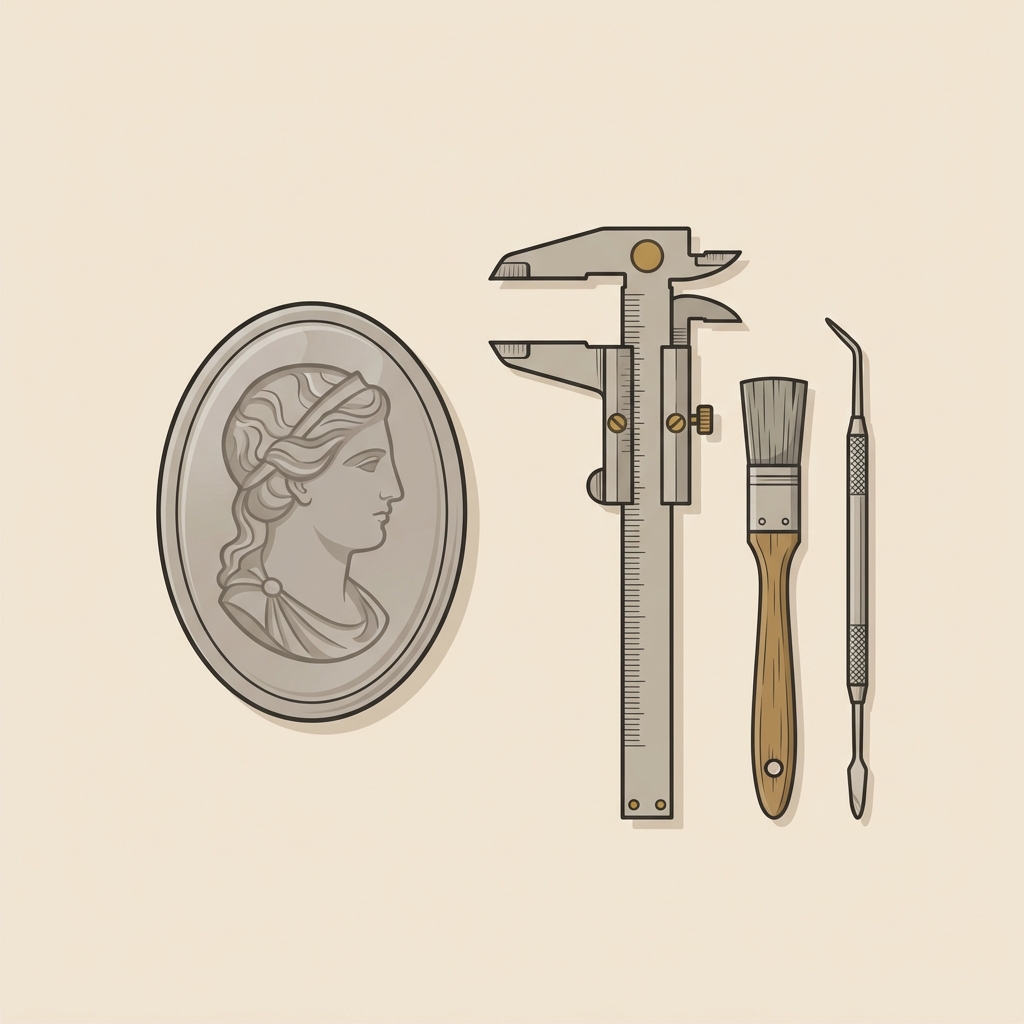
Metal identification establishes intrinsic material, gemstones confirm originality or later replacement, hallmarks provide legal and dating clues where present, and provenance ties the object to a documented history; evaluate each pillar and note where evidence is absent or ambiguous because that absence affects market confidence.
Follow behind the scenes with @auroraantiqua for valuation tips and listing previews
Download a concise checklist or request a brief valuation guide to help you gather photographs and documentation before consulting an appraiser.
When comparables are used, prefer recent sales that match period, material, and condition closely, because online and secondary markets now show broader price dispersion across platforms and listing types, which makes close matching crucial for realistic estimates.
How to weigh each pillar depending on the ring
For a plain silver hoop, metal identification and hallmarks may matter most; for an intaglio ring, gemstone ID and whether the carving is original strongly influence dating and value; for rings with claimed collection history, provenance documentation can be decisive and reduce legal and ethical risk GIA guidance on identifying antique jewelry.
In practice, give more weight to lab-backed metal and stone reports for high-value pieces and treat stylistic attributions as supporting evidence rather than determinative proof when other pillars are weak.
How to check hallmarks and verify metal content
Reading common hallmark elements and assay marks
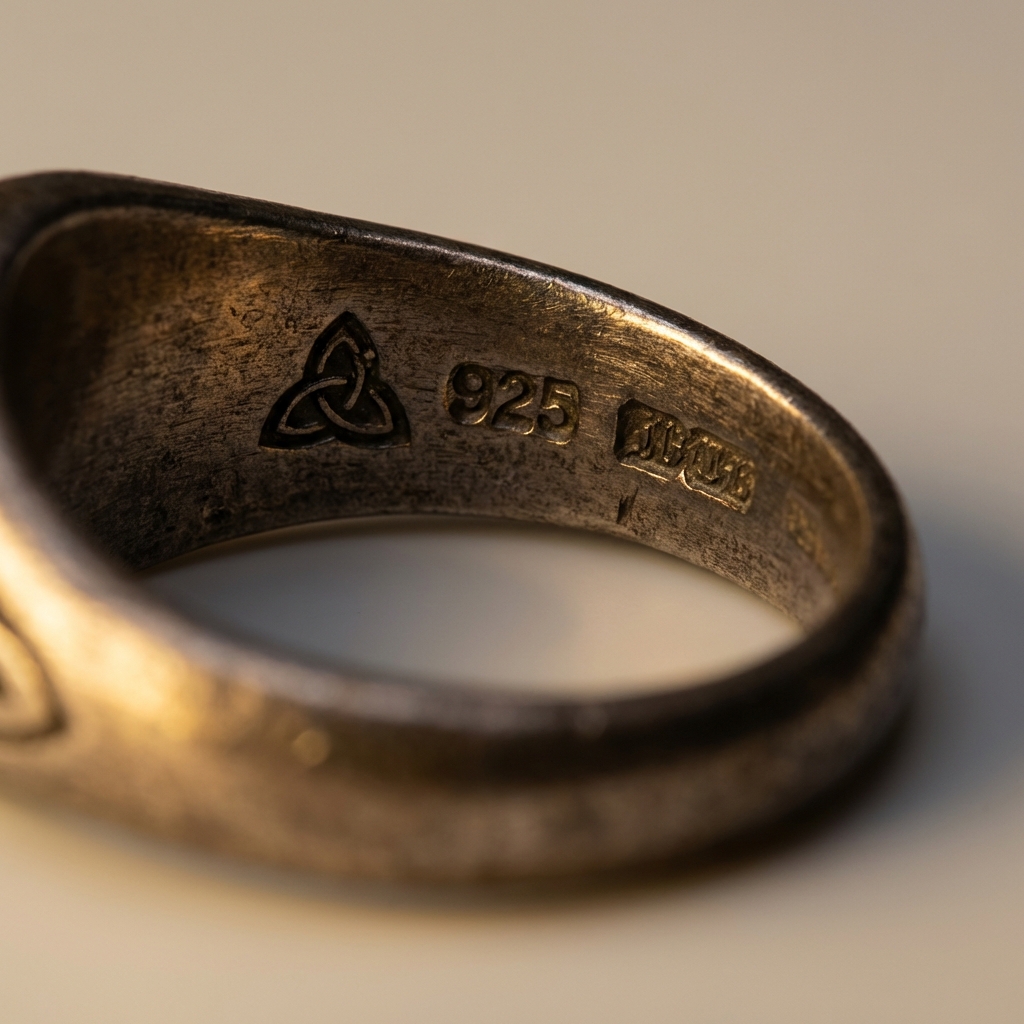
Official hallmarks and assay-office records are among the highest-confidence evidence for metal content; photograph marks carefully, transcribe characters exactly, and compare them to national hallmark registries to confirm assay details rather than relying on seller descriptions The Goldsmiths' Company Assay Office guide. See also the Assay Office guide for further context Understanding hallmarks and your jewellery.
Common hallmark elements include maker marks, fineness numbers, assay office symbols, and date letters in some systems; understanding which elements are present helps narrow where and when a ring might have been assayed but does not substitute for laboratory testing if marks are missing or altered.
Using national hallmark databases and what to record
Practical steps: take high-resolution close-ups under raking light, transcribe marks in the order they appear, note ring measurements and weight, and record any uncertain characters to aid cross-checking against official databases or to share with a specialist. National registry details such as those provided by the Dublin Assay Office can assist in some jurisdictions Dublin Assay Office Hallmarks.
If hallmarks are absent, worn, or suspiciously altered, consider laboratory testing such as XRF metal analysis to determine content, and document any tests in writing because assay offices and buyers will want verifiable evidence for declared metal type. Online tools may help narrow possibilities when transcriptions are uncertain, for example when using a hallmarks lookup service Free UK Hallmark Finder.
Gemstones and intaglios: identification and impact on dating and value
What gemological reports tell you
Laboratory identification by a recognised gemological institute clarifies whether a cabochon or intaglio is natural, treated, or a later replacement, and that information can materially change a ring's dating and market value, so request a gem report when the stone is central to attribution GIA guidance on antique and estate jewelry.

Intaglios and carved stones can carry stylistic signals that help with period attribution, but stones are often replaced over time; a gemological report that describes material, treatments, and evidence of re-cutting or later setting provides the factual basis to judge whether the stone supports the claimed date. Related intaglios are represented across our ancient Roman collection intaglios.
How replacements or treatments change value
When a stone is identified as a later replacement or as having undergone significant treatment, it typically reduces the ring's attribution certainty and therefore affects market price because collectors and museums prize original combinations of mount and stone more highly than later composites.
Photograph the stone from multiple angles, record measurements and visible wear, and provide this documentation when submitting a piece for gemological review to speed up assessment and avoid misunderstandings about originality.
Provenance, documentation and legal or ethical considerations
Types of provenance documents to look for
Relevant provenance documents include clear collection history, dated acquisition invoices, prior catalog entries, export or import paperwork, and any verification letters or laboratory reports that accompany a sale; these reduce both legal and ethical uncertainty around an object's ownership history The British Museum guidance on provenance.
Request full documentation where available, and when a seller cites prior ownership or a museum deaccession, ask for the specific paperwork that supports the claim rather than accepting a summary sentence in a listing.
How provenance changes market and legal risk
Clear, traceable provenance reduces legal complications and reassures buyers and institutions, while incomplete provenance increases the due diligence burden and typically reduces the price a cautious buyer will pay.
If provenance is incomplete, factor in potential legal and ethical risk when estimating value and consider seeking a specialist provenance researcher or legal advice for material with uncertain export or acquisition history.
Condition, restoration notes and how conservation affects market perception
Reading condition and restoration notes
Condition and restoration notes describe structural integrity, patina, polished or stabilised areas, and any repairs; conservators and experienced buyers generally place more confidence in conservatively documented work that preserves original surfaces and patina rather than aggressive restoration GIA guidance on documenting antique jewelry.
Ask sellers for clear photos of repairs and any conservator reports, and insist that restoration notes specify what was done, when, and by whom, because this record helps an appraiser assess how intervention affects both appearance and market perception.
template to record condition and restoration notes for a ring
Keep entries factual and dated
Well-documented minimal interventions that stabilise a piece and preserve patina commonly retain greater collector confidence than unrecorded or heavy-handed repairs, and a conservator's report can be decisive in borderline cases.
If restoration has changed original elements or added modern soldering, disclose this clearly and obtain photographic documentation of the steps taken to allow a potential purchaser or appraiser to judge the intervention.
Market comparables and using recent online sales responsibly
How to find recent, closely matched comparables
When assembling comparables, look for recent completed sales or auction results that match period, material, size, and condition closely, and note platform, sale type, and buyer fees because these factors affect net proceeds and apparent prices Hiscox Online Art Trade Report.
A good comparable will match as many of the following as possible: period or attribution, metal content and assay marks, stone type and original setting, and condition including restoration history; document differences clearly when using comparables to avoid misleading conclusions.
Platform effects and price dispersion to watch
Online resale growth has increased available comparables but also widened price dispersion across marketplaces and listing channels, so prefer recent sales on reputable platforms and be cautious with listings that lack completed sale data or clear condition notes Art Basel market analysis.
When in doubt, consult an appraiser who is active in the relevant market channel because pricing norms vary between specialist auctions, private sales, and consumer marketplaces.
Common mistakes and red flags when judging value
Too much weight on one factor
Over-relying on a single factor such as an attractive provenance statement, a nice photo, or a stylistic label is a frequent error; value is multi-factorial and requires corroboration across pillars before confident conclusions are drawn.
Assume that stylistic similarity alone does not prove age or origin and that sellers may unintentionally conflate appearance with documented attribution; always ask for the underlying documentation that supports claims.
Ignoring missing documentation
Red flags include obscured or altered hallmarks, vague or missing acquisition records, stones that do not match the claimed period, and restoration notes that are absent or incomplete; these should prompt further investigation before purchase or sale Assay office hallmark guidance.
Quick practical checks a buyer can perform: examine marks under magnification, check for inconsistent soldering, request provenance photos, and ask whether a lab report or conservator note exists for major repairs or stone testing.
Practical checklist and next steps: preparing a ring for valuation, sale or insurance
A one-page checklist to bring to an appraiser or buyer
Prepare a single folder that includes high-resolution photographs from multiple angles, clear measurements and weight, transcriptions of any hallmarks, a written condition and restoration summary, provenance documents, and any prior laboratory reports or appraisals to give an appraiser the evidence they need to provide a reasoned opinion The Appraisal Foundation guidance.
For items with significant stones, add a gemological report; for uncertain metal content, include any XRF or assay reports because appraisers rely on verifiable, dated documentation when preparing a USPAP-style report.
How to document and store records
Keep both digital and physical copies of provenance files, label photographs with dates and views, and store original paperwork in a safe, climate-stable location; when communicating with potential buyers or insurers, be clear about what is known and what remains an estimate.
Next practical steps: gather your photos and hallmark transcriptions, request any existing lab reports from the seller, and if you suspect significant value, commission a recognised appraisal or targeted lab tests as a next step to reduce uncertainty.
Get a formal appraisal when the piece may be high value, for insurance, probate, or sale, or when provenance or legal status is unclear; a written report under recognised standards provides a documented market opinion.
Official hallmarks are high-confidence evidence of metal content; transcribe and compare them with national assay records and seek laboratory testing if marks are missing or seem altered.
If the stone is central to dating or value, a laboratory gem report is advisable because it clarifies whether the stone is original, treated, or a later replacement.
References
- https://www.appraisalfoundation.org/imis/TAF/Content/USPAP/USPAP.aspx
- https://www.britishmuseum.org/our-work/departments/collection-care/provenance
- https://auroraantiqua.store/products/roman-silver-ring-auriga-red-jasper-intaglio-of-cock-drawing-a-chariot-driven-by-a-mouse-1st-3rd-century-ad-eu-57-us-7-5
- https://www.gia.edu/antique-jewelry
- https://www.thegoldsmiths.co.uk/hallmarking/
- https://auroraantiqua.store/collections/rings
- https://www.theassayoffice.co.uk/understanding-hallmarks-and-your-jewellery/
- https://www.assay.ie/hallmarking/hallmarks-explained/compulsory-hallmarks/
- https://antiquejewellers.com/hallmark-finder?srsltid=AfmBOopI3faqHwQXAO4-3auRqBQfsIT0UPP0-VQg8lR6x9rBFgW9WWRC
- https://auroraantiqua.store/collections/ancient-roman-rings
- https://www.hiscox.co.uk/online-art-trade-report
- https://www.artbasel.com/about/market-reports
- https://auroraantiqua.store/pages/contact